
Introduction
Edge Computing and the Internet of Things (IoT) are among the most exciting developments in modern technology today. IoT connects everyday devices such as sensors, smartphones, vehicles, and machines to the internet, allowing them to collect and share data. However, as the number of connected devices grows, traditional cloud computing systems are facing challenges such as delays (latency), high data traffic, and slower response times. This is where edge computing comes in.
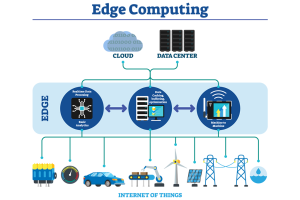
Edge computing brings data processing closer to where the data is generated, enabling faster and more efficient decision-making. Together, edge computing and IoT are creating intelligent systems that can respond in real time and improve how we live and work.
Innovation in Edge Computing and IoT
Recent innovations in technology have made edge computing and IoT more powerful than ever. With the rise of artificial intelligence (AI) and faster communication technologies like 5G, devices can now process data locally instead of sending everything to the cloud.
For example, smart cameras can now detect objects instantly, and wearable devices can monitor health conditions in real time. Technologies such as edge AI, fog computing, and lightweight software containers are making it easier to deploy intelligent systems even on small devices.
These innovations are helping industries become faster, smarter, and more efficient.
Relationship Between Edge Computing and Intelligent IoT Systems
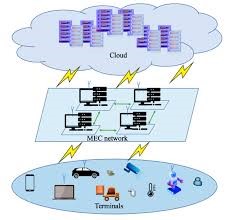
Edge computing and IoT work hand in hand. IoT devices generate large amounts of data, while edge computing processes that data close to the source.
In the past, data had to be sent to distant servers for processing, which caused delays. With edge computing, devices can make decisions instantly without waiting for the cloud. This is especially important for applications like autonomous vehicles or medical monitoring systems where timing is critical.
This strong relationship has led to the development of intelligent IoT systems that can think, learn, and act independently.
Applications and Emerging Impact
The impact of edge computing and IoT can be seen in many areas of life ranging from healthcare, industry to cybersecurity. In healthcare for example, doctors can monitor patients remotely using smart devices that provide real-time data. For smart cities, traffic lights, waste systems, and energy grids can operate more efficiently. Farmers can use sensors to monitor soil and weather conditions, improving crop yields. Factories can detect machine faults early and prevent breakdowns. Self-driving cars and smart traffic systems rely on real-time data processing. Systems can detect and respond to threats instantly. These applications show how edge computing and IoT are transforming industries and improving everyday life.
Conclusion
Edge computing and intelligent IoT systems are changing the way technology works by making it faster, smarter, and more efficient. Instead of relying only on centralized systems, computing is now happening closer to where data is generated. As these technologies continue to evolve, they will play an important role in building smart environments, improving services, and solving real-world problems. However, issues such as security, cost, and system complexity must be carefully managed. With continued innovation and collaboration, edge computing and IoT will shape the future of digital technology.
References
- Shi, W., et al. (2016). Edge Computing: Vision and Challenges. IEEE Internet of Things Journal.
- Satyanarayanan, M. (2017). The Emergence of Edge Computing. Computer.
- Chiang, M., & Zhang, T. (2016). Fog and IoT: An Overview. IEEE Internet of Things Journal.
- Zhou, Z., et al. (2019). Edge Intelligence: Paving the Last Mile of AI with Edge Computing. Proceedings of the IEEE.
- Khan, L. U., et al. (2020). Edge Computing for IoT: A Survey. IEEE Access.
- Cisco (2024). Annual Internet Report.
- IBM (2025). Edge Computing in Industry Report.
 Written by,Mr. Alex Aaron, Faculty, School of Science and Information Technology, Skyline University, Nigeria