
Introduction
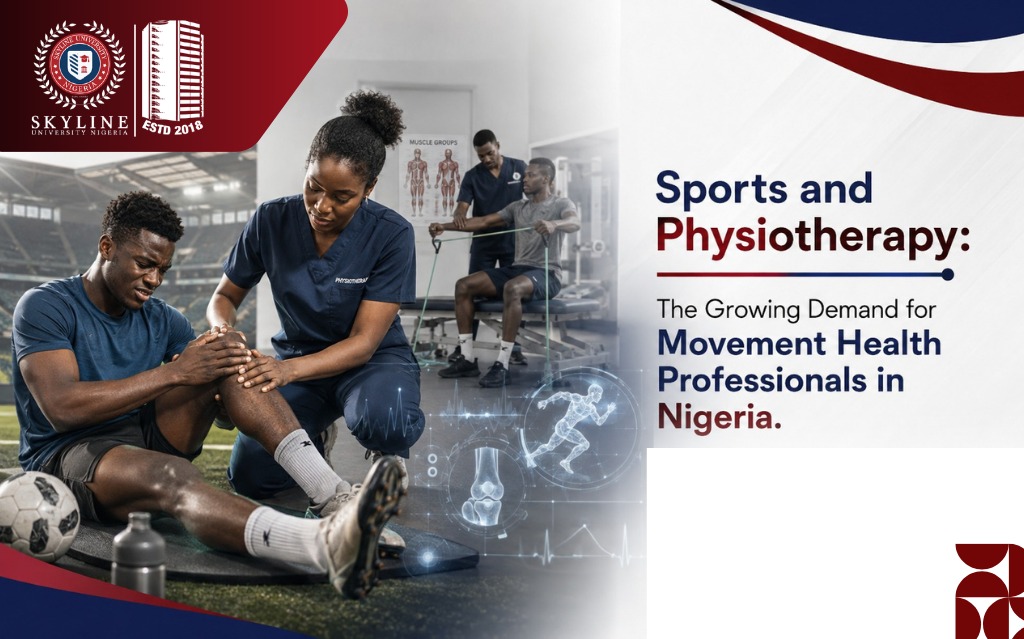
Sports is an important part of Nigerian society, involving professional athletes, university students, school children, and recreational participants. As participation in football, athletics, basketball, wrestling, boxing, fitness, and other sports increases, there is a growing need for professionals who can promote safe movement, prevent injuries, manage sports-related conditions, and support rehabilitation.
Physiotherapists are central to this emerging movement-health profession. Their role has expanded from treating injuries to include injury prevention, performance support, rehabilitation, and safe return to sport.
The Role of Physiotherapy in Sports
Sports physiotherapists contribute throughout an athlete’s journey, including:
- Injury prevention and risk assessment
- Management of acute and chronic sports injuries
- Therapeutic exercise and rehabilitation
- Strength, flexibility, balance, and mobility training
- Movement assessment and correction
- Return-to-training and return-to-sport programmes
- Athlete education and injury prevention
- Performance and recovery support
Common sports conditions managed by physiotherapists include ankle sprains, knee injuries, hamstring strains, muscle injuries, tendinopathies, shoulder injuries, and low-back pain.
The modern approach focuses not only on treating an injury but also on identifying risk factors and helping athletes remain healthy and physically active.
Growing Opportunities in Nigeria
The expansion of sports and fitness activities in Nigeria is creating opportunities for physiotherapists in:
- Professional sports clubs
- Universities and schools
- Sports academies
- Fitness centres and gyms
- Sports medicine clinics
- National and state sports associations
- Private physiotherapy practices
- Sports research and academic institutions
Physiotherapists can also contribute to recreational fitness by helping individuals exercise safely and manage musculoskeletal problems.
Importance of Multidisciplinary Practice
Modern sports healthcare requires collaboration. Physiotherapists work alongside sports physicians, orthopaedic surgeons, sports scientists, strength and conditioning specialists, nutritionists, psychologists, and coaches.
This multidisciplinary approach helps athletes achieve better health, performance, and safe return to competition.
Challenges in Nigeria
Despite the growing need, sports physiotherapy faces several challenges, including:
- Limited awareness of the full role of physiotherapists
- Inadequate sports rehabilitation facilities
- Limited integration of physiotherapists into some sports teams
- Financial constraints
- Limited sports injury surveillance and research
- Need for more specialist training in sports rehabilitation and performance
Addressing these challenges requires stronger investment in education, infrastructure, research, professional development, and collaboration between universities and sporting organizations.
The Future of Sports Physiotherapy
Nigerian universities have an important role in preparing future sports physiotherapists. Training should provide students with practical experience in sports injury assessment, biomechanics, exercise therapy, rehabilitation, injury prevention, strength and conditioning, and return-to-sport programmes.
Universities can also collaborate with sports clubs and organizations to provide clinical placements, injury-screening programmes, research opportunities, and athlete support.
Conclusion
The future of Nigerian sports depends not only on identifying talented athletes but also on keeping them healthy and physically capable of performing at their best. Physiotherapists are therefore becoming increasingly important as movement health professionals.
The profession is moving from a traditional focus on treating injuries toward a broader role involving prevention, rehabilitation, performance optimization, and lifelong movement health.
Nigeria needs not only more athletes, but also more skilled professionals who can protect, restore, and optimize the movement that makes sporting achievement possible.
Written By, Mr. Yusuf Usman
Lecturer II
Department of Physiotherapy
School of Basic Medical Sciences