
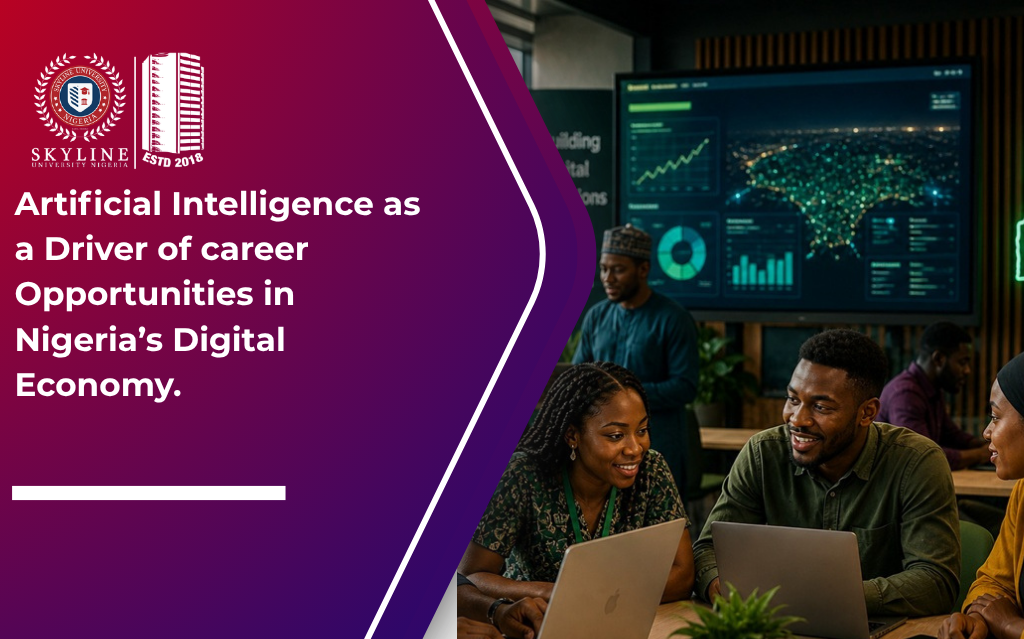
Artificial Intelligence (AI) is rapidly transforming the global economy, and Nigeria is emerging as one of Africa’s leading digital innovation hubs. With a young population, increasing internet penetration, and a thriving technology ecosystem, AI presents enormous career opportunities for Nigerian students and professionals. As the country continues to embrace digital transformation across government, education, healthcare, agriculture, banking, and manufacturing, AI has become one of the most promising career paths for the future.
Nigeria’s digital economy is expanding at an unprecedented pace. Businesses are increasingly adopting AI-powered solutions to automate operations, improve customer experiences, analyze large volumes of data, and enhance decision-making. From intelligent chatbots in customer service to fraud detection systems in financial institutions, AI is becoming an essential tool for organizations seeking to remain competitive. This growing demand has created a significant need for skilled AI professionals.
One of the greatest advantages of pursuing a career in AI is the diversity of job opportunities available. AI specialists can work as machine learning engineers, data scientists, AI researchers, robotics engineers, computer vision experts, natural language processing specialists, and AI consultants. These roles are in high demand not only within Nigeria but also across international markets, allowing professionals to work remotely for global organizations while contributing to Nigeria’s economic development.
AI also plays a critical role in solving some of Nigeria’s most pressing challenges. In healthcare, AI can support early disease diagnosis, improve medical imaging, and optimize hospital management. In agriculture, AI-powered systems help farmers predict weather conditions, monitor crop health, and increase productivity. Financial institutions use AI to detect fraudulent transactions, assess credit risks, and provide personalized banking services. Educational institutions are implementing AI-based learning platforms that personalize instruction and improve student outcomes. These practical applications demonstrate how AI contributes to national development while creating meaningful employment opportunities.
The Nigerian government has also recognized the importance of digital technologies in achieving sustainable economic growth. Investments in digital infrastructure, innovation hubs, entrepreneurship programs, and technology education are creating a supportive environment for AI adoption. Universities and training institutions are increasingly introducing AI, data science, and machine learning programs to equip graduates with industry-relevant skills.
For young Nigerians, AI offers more than just employment—it provides opportunities for innovation and entrepreneurship. Many start-ups are leveraging AI to develop solutions in e-commerce, logistics, fintech, cybersecurity, education, and healthcare. With access to cloud computing, open-source AI frameworks, and online learning platforms, aspiring AI professionals can build products that address local challenges while competing in global markets.
However, success in AI requires continuous learning. Professionals must develop strong foundations in mathematics, programming, statistics, data analysis, and problem-solving. Familiarity with programming languages such as Python, machine learning libraries, cloud platforms, and ethical AI practices will provide a competitive advantage. Soft skills, including communication, teamwork, creativity, and critical thinking, are equally important for collaborating across multidisciplinary teams.
In conclusion, Artificial Intelligence is more than an emerging technology—it is a strategic driver of Nigeria’s digital economy. As industries increasingly adopt AI solutions, the demand for qualified professionals will continue to rise. By investing in AI education and skills development today, Nigerian students and professionals can position themselves for rewarding careers, contribute to national economic growth, and become innovators who shape the country’s digital future. AI is not simply the career of tomorrow; it is a career of today that offers limitless opportunities for those prepared to embrace it.
Dr. A. Syed Haroon
Senior Lecturer, School of Science and Information Technology.