Skyline University Nigeria

Author name: ASMAU UBA MUHAMMAD

BLOG POST 28-3-2025

Embracing Diversity: The power of a Multi-Cultural Learning Environment

Diversity is not just a concept—it is a driving force in shaping education, career success, and global understanding. A multi-cultural environment of learning where students and teachers from various cultures interact makes the learning process more enriching and prepares individuals for the reality of a more globalized world. At Skyline University Nigeria (SUN), internationalization is evident in its diverse student and staff body from all over the world. With students and lecturers of different nationalities, cultures, and backgrounds, SUN provides a rich and cosmopolitan learning environment where global interaction is one of the cornerstones of academic and personal growth. A multi-cultural learning environment provides a platform for students to have vibrant cross-cultural interactions. When individuals from different backgrounds interact, they are exposed to multiple perspectives, methods of communication, and solutions to problems. This fosters empathy, respect for each other, and sensitivity to differences in culture. Such is the case in Skyline University Nigeria, where this is witnessed in the classroom, where students learn not only from their lecturers but also from the personal experiences of their peers. Exposure to multiple viewpoints also develops critical thinking skills. Challenging students to think out multiple perspectives makes them more adaptable and open-minded. This enhances classroom discussions, facilitates creative thinking, and advances the ability to solve complex global problems creatively and with compassion. As business and organizations operate on a global scale, being able to succeed in one’s career to adapt to different work environments is an essential skill. A multi-cultural learning environment such as that offered at Skyline University Nigeria acclimatizes students to the diversity of the global workforce. Students learn how to communicate with students and staff members of diverse cultural backgrounds effectively, acquiring good interpersonal skills, flexibility, and appreciation of diverse work ethics and business cultures. Employers increasingly need workers who can function well in multicultural teams. The international experience students gain at SUN puts them ahead of others in the job market, poised to excel in multinational enterprises, diplomatic service, entrepreneurship, and other sectors where cross-cultural expertise is an asset. A multi-cultural learning environment plays a crucial role in breaking down stereotypes and fostering inclusivity. When students at Skyline University Nigeria engage with people from diverse backgrounds, they come to appreciate the importance of diversity rather than fear. This ultimately leads to creating a more harmonious and inclusive society where diversity is considered a strength rather than a division. Moreover, SUN actively promotes international engagement through collaboration with institutions globally. The latest Memorandum of Understanding (MoU) with Sheridan College, Canada, is a testament to SUN’s commitment to increasing opportunities for student exchange, faculty collaboration, and global networking. Such efforts strengthen the university’s resolve to produce well-rounded graduates with a global orientation. Embracing diversity in learning is not simply about encouraging inclusivity—it is about creating a more competitive, innovative, and empathetic world. At Skyline University Nigeria, the imperative for internationalization means that students and faculty experience the power of a truly global learning community. Through offering exposure to various cultures, fostering cross-border interaction, and preparing students to succeed in a multi-culture world, SUN is producing future leaders who are positioned to make a difference globally. Diversity is not merely a plus; it is a necessity for meaningful education and sustained development. This credo is lived every day at Skyline University Nigeria. You can join the conversation on Facebook @SkylineUniversityNG and on Twitter @SkylineUNigeria  

Embracing Diversity: The power of a Multi-Cultural Learning Environment Read More »

BLOG POST 26-3-2025

Beyond the classroom: The unmatched experience of studying at Skyline University Nigeria

University education goes beyond classroom attendance and examination passage; it is an experience that prepares individuals for the future. At Skyline University Nigeria (SUN), students get an education that goes far beyond the classroom. With academic excellence, extracurricular activities, global exposure, and industry linkages, SUN makes sure that students grow holistically—both professionally and personally. SUN has an international standard curriculum that equips students to compete in the global job market. The university’s affiliation with Sheridan College, Canada, and other international universities ensures students exchange programs, joint research opportunities, and networking. The foreign and local faculty, being cosmopolitan, has much to impart, giving students practical and theoretical know-how in their respective disciplines. Additionally, SUN’s emphasis on technology integration and innovation equips students with digital skills that are demanded in the contemporary job market. The university’s recent launch of the Digital Literacy and ICE (Information, Communication, and Ethics) program is a testament to its commitment to preparing students for the digital age. Learning at Skyline University Nigeria is not only books. The university incorporates hands-on experiential learning via internships, industrial visits, and mentorship programs. With significant partnerships in various industries, students get exposure in the real world, which makes them more employable. The guest lecture workshop series, provides students with valuable knowledge in financial literacy, mental health, and self-improvement. Leaders from industries are also present in the workshops, and they share their experiences, along with guiding students on career growth. Beyond academics, SUN offers vibrant campus life that promotes innovation, leadership and teamwork. The students participate in clubs and societies ranging from technology and entrepreneurship clubs to sports. These are platforms for networking, skill acquisition and service to the community. The university conducts regularly different activities such as student conferences, leadership seminars, and entrepreneurship competitions for motivating students to create new ideas and showcase their talents. Through these activities, students become confident, problem solvers, and versatile individuals. At Skyline University Nigeria, the students have an open and supportive atmosphere. Administrative staff and faculty provide career guidance and mentorship to ensure students receive all the assistance they need to excel academically and professionally. The emphasis of the university on mental health and well-being, as in recent workshops, also demonstrates the university’s focus on comprehensive student development. With the latest infrastructure, well-equipped laboratories, and a state-of-the-art e-learning system, SUN offers an atmosphere for innovation and knowledge acquisition. With the individualized style of the university, students are able to identify their talents and interests and establish the foundation for a bright future. Skyline University Nigeria offers an education that transcends the classroom. With a commitment to academic excellence, experiential learning, extracurricular activities, and a supportive environment, SUN gives students an experience that is second to none and prepares them for the future. For those seeking a life-changing education that integrates knowledge, skill development, and exposure to the outside world, SUN is the ideal choice. You can join the conversation on Facebook @SkylineUniversityNG and on Twitter @SkylineUNigeria  

Beyond the classroom: The unmatched experience of studying at Skyline University Nigeria Read More »

Knowledge update 24-3-2025

The Role of Innovation in Women-Led Enterprises

Introduction Innovation is one of the main drivers of business success, particularly for women-led businesses that face unique challenges in getting access to capital, markets, and business networks. Women entrepreneurs are leveraging innovation to create competitive edges, improve efficiency, and scale their businesses across various industries. Innovation as a Catalyst for Business Growth Innovation enables women entrepreneurs to grow their business, rationalize resources, and improve service delivery. Research suggests that firms engaged in innovative practice have a better likelihood of increasing at a high rate and making profits (Alsos, Ljunggren, & Hytti, 2013). Women-owned companies, particularly technology, healthcare, and education ventures, have shown innovative solutions in addressing social challenges. For instance, in Africa, women entrepreneurs have developed fintech products that expand financial inclusion, and they facilitate excluded groups to access banking services (GEM, 2021). Digitalization has also been a primary source of innovation. The majority of women-owned enterprises have adopted e-commerce platforms, artificial intelligence, and automation to improve efficiency. For example, a study by the International Finance Corporation (IFC) found that women entrepreneurs who used digital solutions in their businesses had better revenue and customer retention (IFC, 2022). These innovations have helped women entrepreneurs overcome traditional challenges such as lack of access to physical markets and gender discrimination in business networks. Enhancing Market Competitiveness Women entrepreneurs leverage innovation to make their businesses more competitive in the local and foreign markets. Innovation in business models, products, and marketing methods allows them to distinguish their firms from those of competitors. Brush, de Bruin, and Welter (2014) inform us that product development and customer interaction innovation significantly improves the market position of women-led firms. More women entrepreneurs have embraced sustainable business models as a competitiveness strategy. Within the fashion industry, for example, women-led enterprises have established green and ethical fashion brands that are gaining popularity among environmentally conscious consumers. The embracing of sustainable supply chains, biodegradable materials, and ethical labor practices has not only positioned such businesses as industry leaders but also assisted in environmental conservation (United Nations Women, 2021). Besides, social innovation has been a distinguishing feature of women-led startups. Women entrepreneurs are more likely to focus on businesses that address social problems, such as gender inequality, education, and healthcare. For example, women-owned businesses in India have developed affordable healthcare solutions for rural communities, using technology for closing healthcare gaps (World Economic Forum, 2022). Driving Sustainable Development Innovation in women entrepreneurship is a driving force behind sustainable development. The application of new technologies in agriculture, energy, and technology has been marked by women entrepreneurs promoting economic growth while addressing significant global issues. The World Bank (2022) report confirms that women entrepreneurs who have invested in green technology and renewable energy have made significant advancements in accessing clean energy in the rural regions. Despite all these inputs, female entrepreneurs also have to cope with barriers including limited opportunities to obtain funds and prejudices in society. Governments as well as financing agencies should develop policies supporting woman innovators via finance, advising, and connections with research and development capacity. Conclusion Innovation is a potent tool that can assist women-owned firms in building up, competing, and fostering sustainable development. Women entrepreneurs are transforming industries and addressing worldwide challenges with technology uptake, market-driven solutions, and social innovation. Nevertheless, for them to amplify the role of innovation, policymakers and stakeholders must provide supportive environments to allow women entrepreneurs to thrive. References Nusaiba Ibrahim Na’abba is currently a content writer at Skyline University Nigeria. You can join the conversation on Facebook @SkylineUniversityNG and on Twitter @SkylineUNigeria  

The Role of Innovation in Women-Led Enterprises Read More »

PSDP 21-3-2025

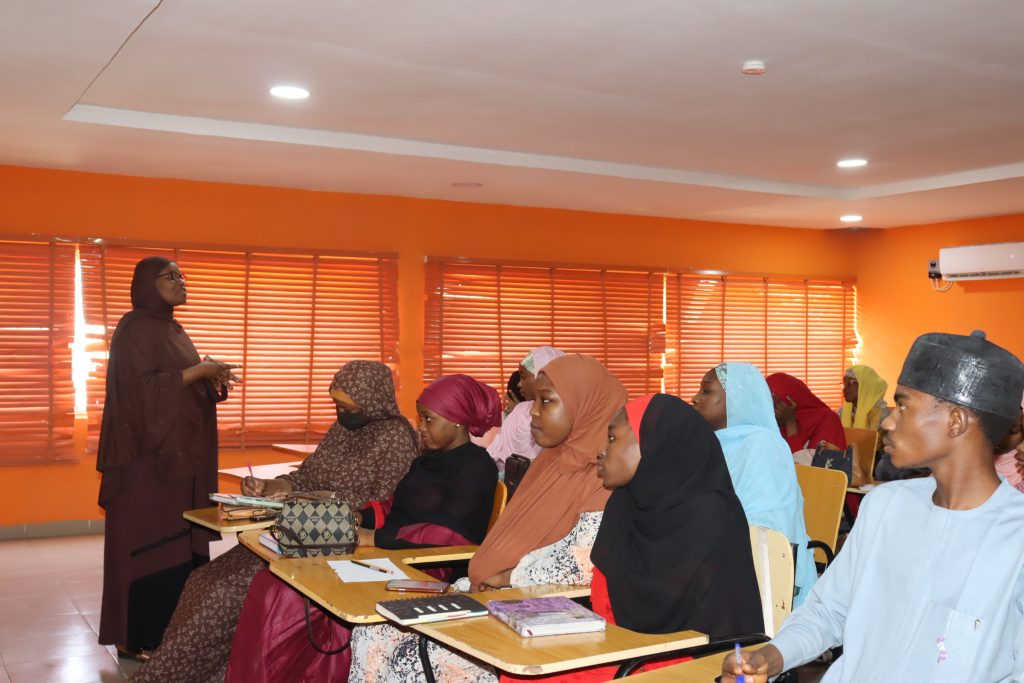
Skyline University Nigeria conducts Professional Skills Development Program for students of AY 2024/2025

The Student Services Department of Skyline University Nigeria has successfully concluded the Professional Skills Development Program (PSDP) for undergraduate students of the 2024/2025 academic year. The program, which ran from March 17th to March 21st, 2025, was designed to equip students with essential knowledge and skills to navigate their university journey effectively. During the week-long training, students participated in interactive sessions that covered a range of crucial topics aimed at enhancing their professional and personal growth. These sessions focused on career planning and goal setting, leadership and management skills, time management, teamwork and collaboration, networking, and professional relationships. The program provided students with practical tools to develop a strategic approach to their academic and career aspirations. One of the key highlights of the program was the session on E-fraud and Cyber Crime: A Legal and Social Perspective, which educated students on the importance of cybersecurity in the digital age. Additionally, topics such as Ethical Practices and Social Responsibility, The Leadership Compass: Value and Professional Ethics, and Interpersonal Skills emphasized the significance of integrity and effective communication in professional settings. Another notable aspect of the PSDP was its focus on cognitive and creative skills, including Design Thinking and Lateral Thinking Skills, as well as Building Learning Capacity: Dyslexia and Legal Education. These sessions provided students with insights into innovative problem-solving techniques and inclusive learning approaches, preparing them for dynamic professional environments. The program also enhanced students’ presentation skills, ensuring they could confidently articulate their ideas in various academic and professional settings. By the end of the PSDP, students had gained a comprehensive understanding of essential skills needed for academic success and career readiness. Skyline University Nigeria continues to prioritize programs that prepare students to become well-rounded professionals, capable of excelling in their respective fields. With initiatives like the PSDP, the university reaffirms its dedication to producing graduates who are not only academically proficient but also professionally competent and ethically grounded. You can join the conversation on Facebook @SkylineUniversityNG and on Twitter @SkylineUNigeria  

Skyline University Nigeria conducts Professional Skills Development Program for students of AY 2024/2025 Read More »

Ministry of Labour and Employment 20-3-2025

Skyline University Nigeria receives Ministry of Labour and Employment on courtesy visit

Skyline University Nigeria (SUN) has on Tuesday 18th March 2025, received with pleasure, Mr. Abdullahi Aliyu, the zonal director and controller, Kano State, Federal Ministry of Labour and Employment alongside Mr. Nasiru Usman, a senior labour officer and Mr. Ubale Salihu, a labour officer at the ministry. The team paid a courtesy visit to the Vice-Chancellor of SUN, Prof. Ajith Kumar V. V. In his remarks, SUN Vice-Chancellor expressed his gratitude on behalf of the university’s management for the visit and the support of the ministry. He said the ministry always helped the university steer its affairs to the right direction right form its inception. He admitted that the university has also implemented the minimum wage salary structure as per the Nigerian government policy. Speaking during the visit, Mr. Aliyu said the ministry is always pleased to visit the institution. He commended the management of the university for attaining greater heights and especially in the aspect of quality education and internationalization. With the high number of expatriates, the students will learn about their chosen fields of study and understand better cultures and how to network with people. The registrar of SUN, Mr. Ahmed Muhammed Abdullahi, in his discussion with the team appreciated the ministry for the visit as well. After a brief presentation and insightful interaction, he led the team for a tour round the campus to see the facilities in place that support staff wellbeing at the university. They toured the gym and common room facilities among other ultra-modern amenities. You can join the conversation on Facebook @SkylineUniversityNG and on Twitter @SkylineUNigeria  

Skyline University Nigeria receives Ministry of Labour and Employment on courtesy visit Read More »

IWD 2025

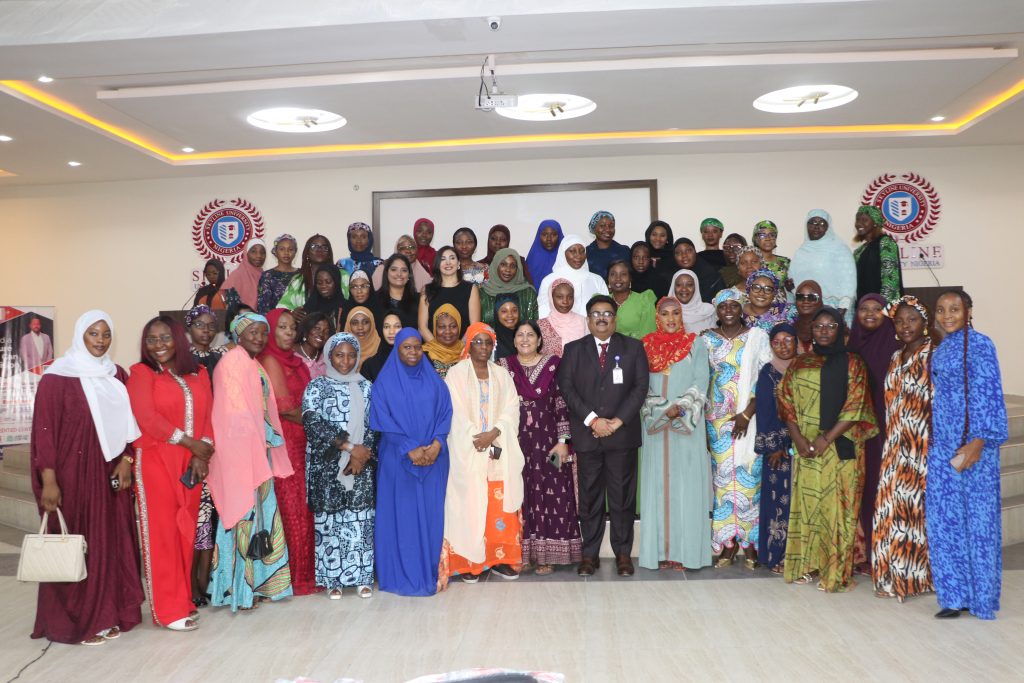
Skyline University Nigeria celebrates International Women’s Day 2025

In commemoration of International Women’s Day 2025, Skyline University Nigeria (SUN) organized a celebration and grand iftar for female staff and some women that have distinguished themselves in their careers in Kano State. The event was conducted at the university’s ultra-modern auditorium, also known as the Senator Rabiu Musa Kwankwaso auditorium, on Friday, 14th March, 2025. In attendance was the Vice Chancellor of SUN, Prof. Ajith Kumar V. V.; the Director of Government and Public Relations, Ms. Sarada Maganti, who was also the organizer; and other principal officers of the university. The event was graced by Ms. Dinatu Maji, a civic engagement expert, and Ms. Yasmin Obadaki, the founder of Matters Arising to Address Womanhood (MATA), as its keynote speakers. Also, the university was pleased to have as one of its panelists the only female chairman in Kano State, that of Tudun Wada Local Government Areas, Hon. Sa’adatu Salisu Yushau. Other notable speakers who participated in panel discussions include Ms. Jihanne Kashanna Dib, the founder and principal of the French Section of Lebanon School; Dr. Shravya Shetty, oral and maxillofacial pathologist and dental implantologist; Ms. Ada o. Chibuzor; Ms. Zenab Adam; and Mrs. Goodluck Ugwumba. Ms. Farida Audi, Ms. Hafsa Adam, Ms. Adaora Angela, Ms. Adenike Emmanuel, Ms. Hauwa Adamu Kiyawa, and Ms. Zainab Baba Aliyu. Discussions during the session centered around education, leadership, and women’s empowerment through health and digital spaces. The speakers, in their various engaging and interactive speeches, mention sustainable ways of empowering women, most of which they have practiced in their various careers. The event provided the opportunity for women to connect and network with one another. It also gave the attendees an incredible platform for knowledge sharing on how women’s empowerment is especially needed for societal development. You can join the conversation on Facebook @SkylineUniversityNG and on Twitter @SkylineUNigeria  

Skyline University Nigeria celebrates International Women’s Day 2025 Read More »

KNOWLEDGE UPDATE 17-3-2025

Navigating the Future of Work in a Technology-Driven World

Introduction The world of work is undergoing a profound transformation driven by rapid advancements in digital technology. Artificial intelligence (AI), automation, big data, and remote work have reshaped how businesses operate and how individuals engage with their professions. As we move further into the digital age, the future of work will be defined by flexibility, digital literacy, and continuous learning. The Rise of Automation and Artificial Intelligence One of the most significant changes in the workplace is the increasing reliance on automation and AI. These technologies enhance productivity, streamline operations, and reduce human error. In industries like manufacturing, AI-driven robots have taken over repetitive and hazardous tasks, improving efficiency and safety. In the service sector, AI-powered chatbots and virtual assistants provide instant customer support, allowing businesses to operate round the clock. While automation and AI eliminate certain jobs, they also create new opportunities. The demand for data analysts, cybersecurity experts, AI specialists, and robotics engineers has surged. Additionally, soft skills such as critical thinking, problem-solving, and emotional intelligence remain invaluable, as machines cannot replicate human creativity and empathy. Remote and Hybrid Work Models The COVID-19 pandemic accelerated the adoption of remote work, proving that many tasks can be effectively performed outside traditional office spaces. As a result, hybrid work models—where employees split their time between home and the office—have become the new normal. Companies recognize the benefits of flexible work arrangements, such as reduced overhead costs, improved work-life balance, and access to a global talent pool. However, remote work presents challenges, including cybersecurity threats, digital fatigue, and difficulties in fostering team collaboration. Organizations must invest in secure digital infrastructure and adopt tools that facilitate seamless communication and collaboration among remote teams. The Importance of Digital Skills As technology continues to evolve, digital literacy has become a prerequisite for career success. Employees must develop proficiency in using digital tools, data analytics, cloud computing, and cybersecurity measures. Organizations are increasingly prioritizing upskilling and reskilling programs to equip their workforce with relevant competencies. Educational institutions also play a crucial role in preparing students for the digital workforce. Curricula should incorporate coding, artificial intelligence, and digital marketing, ensuring graduates are ready for the demands of the modern job market. Governments and private organizations must collaborate to provide lifelong learning opportunities, enabling individuals to adapt to the changing landscape. The Gig Economy and Entrepreneurial Opportunities The digital age has given rise to the gig economy, where freelancers and independent contractors take on short-term projects rather than traditional full-time jobs. Platforms like Upwork, Fiverr, and TaskRabbit allow professionals to market their skills and work on a global scale. This shift towards independent work offers flexibility and autonomy but also presents challenges such as job insecurity and lack of employee benefits. To support gig workers, policymakers must establish frameworks that provide social security, health insurance, and legal protections. Entrepreneurship is also thriving in the digital era. With minimal startup costs, individuals can launch online businesses, develop mobile applications, or create content on platforms like YouTube and TikTok. Digital marketing, e-commerce, and fintech innovations have opened doors for aspiring entrepreneurs to reach a global audience. Ethical Considerations and Workforce Diversity The future of work must be guided by ethical principles. AI and automation raise concerns about job displacement, data privacy, and algorithmic bias. Companies must implement fair hiring practices, ensure transparency in AI-driven decision-making, and prioritize cybersecurity. Additionally, workforce diversity and inclusion should be at the forefront of organizational policies. Companies that embrace diversity benefit from a wider range of perspectives, leading to innovation and improved problem-solving. Providing equal opportunities for underrepresented groups in tech fields is crucial for sustainable and inclusive growth. Conclusion The future of work in the digital age is dynamic and full of opportunities. While automation and AI transform industries, they also create new career paths. Remote work and the gig economy provide flexibility, but they require strong digital infrastructure and policy support. To thrive in this evolving landscape, individuals must embrace lifelong learning, develop digital skills, and adapt to new work models. Organizations and governments must work together to create inclusive, ethical, and resilient work environments that harness the power of technology for a better future. As we navigate this digital revolution, one thing is certain—the ability to adapt and innovate will be the key to success in the future of work. Miracle Uwa Livinus is a Lecturer II in the Department of Biochemistry, School of Science and Information Studies at Skyline University Nigeria. He has M.Sc in Nutritional Biochemistry from Nasarawa State University, B.Sc in Biochemistry, PGDE in Education from Bayero University Kano. He has acquired professional certificates in Essentials of Infant and Young Children Feeding (IYCF), Human Resources for Health (HRH): Principles and Practices, Gender, Sexual and Reproductive Health, among many others. 

Navigating the Future of Work in a Technology-Driven World Read More »

CULTURAL DAY 2025 12-3-2025

Skyline University Nigeria conducts Cultural Day 2025

Skyline University Nigeria (SUN) was transformed into a bustling and dynamic Cultural Day 2025, a celebration of Nigeria’s rich cultural heritage and global traditions. The festival, which took place at the university campus, provided students, personnel, and guests with an exposure to cultural expressions in drama, music, dance, fashion, and food. The event for this year was also conceptualized to promote unity, understanding, and appreciation of diverse cultural identities in the university community. In his address, Vice-Chancellor of Skyline University Nigeria, Prof. Ajith Kumar V. V., pointed to the merit of cultural awareness in promoting inclusivity and global citizenship. He commended the efforts of the organizing committee and encouraged students to embrace cultural diversity as a means of learning and collaboration. Some distinguished guests, including local leaders and cultural ambassadors, also attended, adding more glory to the celebration. The activity featured ethnic performances from various ethnic groups in the country like the Hausa, Igbo, and Yoruba communities, foreign students with various backgrounds like Morocco, Tuareg, Algeria, South Africa, and the host Nigerian students. Attendees were treated to fabulous traditional dances, poetry recitals, and drama presentations highlighting the peculiarity of each culture. There was a fashion show where students dressed in their local wear, showcasing the richness of world and Nigerian heritage. Some of the highlights of the programme were the presentation of traditional food, where the participants experienced sampling delicacies all over the country. Amala and ewedu soup, tuwo shinkaf, jollof rice, and suya were among the favorite foods sampled. There were also interactive cultural stands where individuals were able to comprehend historical artifacts, traditional crafts, and indigenous storytelling culture. Skyline University Nigeria Cultural Day 2025 was an instant success, vindicating the university as it promotes intercultural discussions and cultural heritage management. Its visitors departed not just with added awareness of how beautiful diversity truly is, stronger cross-national, ethnic friendships that shall last longer. As SUN steers closer towards internationalization and education norms, experiences such as Cultural Day refresh everyone with an understanding of just how essential culture and heritage are to all the vibrant educational communities. You can join the conversation on Facebook @SkylineUniversityNG and on Twitter @SkylineUNigeria  

Skyline University Nigeria conducts Cultural Day 2025 Read More »

Business Practices KNOWLEDGE UPDATE

Sustainable Business Practices

Introduction Businesses aspiring to long-term success want no option but to become sustainable. As the environmental issues are mounting, including stakeholders maintaining the ethical responsibility, businesses must seem the strategies that learn to interact with the sustainable atmosphere with the economic growth. Long term profitability comes from sustainable business practices while reducing the negative impact of those business practices on the planet and the society. Environmental Sustainability Reducing a company’s environmental footprint is one of the key pillars of sustainability. This can be achieved by the business implementing energy efficient systems, adopting renewable energy sources such as solar and wind power, and optimizing resource usage. Operational costs and carbon emissions can be slashed up to the tens of percent range by making investments in energy efficiency measures like switching to LED lighting and implementing smart energy management systems. Improving on waste reduction is another critical area. A recycling program, the reduced use of plastics, and the adoption of a circular economy that recycles materials can minimize waste for companies. Sustainable supply chains also play a large role since businesses can bring on board eco-friendly suppliers, keep logistics minimal and thus effective to minimize emissions, and have just the right ethical sourcing of raw materials. Social Responsibility CSR deals with the interests of employees, customers, and the communities. Fair labor practices are very important, starting from ensuring safe working conditions, fair wages, and employee wellness programs. Investments in employee satisfaction lead to increased productivity and a lower rate of turnover for a company. Businesses don’t merely need to interact with their communities beyond the workplace. There are ways that companies can contribute positively to society by supporting local initiatives, sponsoring education programs, and doing ethical sourcing practices. Equally important are diversity and inclusion in the workplace because they stimulate innovation and the same for all field employees. Economic Sustainability In the long term, businesses must be seeking to be financially stable and doing the right thing. An important contribution to sustainable success is green innovation, i.e., green products and services by companies that attract environmentally minded customers. Leading organizations invest in sustainable research and development and are accordingly ahead of the competition and ahead of market shifts. Another important aspect is ethical governance, one that entails transparency, accountability, and compliance with regulatory standards. This means that companies that practice sustainability laws, adopt responsible investment tactics, and run ethical business practices establish stronger relationships with their stakeholders and enjoy a definite advantage over their competitors. Conclusion   For companies to be successful in today’s market and serve the world well while being sustainable, these businesses need to have sustainable business practices. Environmentally conscious, socially responsible, and morally sound financial management can result in businesses generating long-term value for them and for the environment. When sustainability is on the top of your concern list, aside from enhancing brand reputation and securing lasting profitability and customer loyalty, you have the upper hand. Mr Aliyu Mohammed is Lecturer II of the Department of Management, School of Arts, Management and Social Science, Skyline University Nigeria. He holds a Master’s Degree in Management from Bayero University Kano (B.U.K) and a Bachelor of Science in Business Administration from Bayero University Kano (B.U.K). He also attended Kano State College of Arts and Science, Remedial Studies, Kano State, where he obtained the certificate for Advanced Level Interim Joint Matriculation Examination (IJMB).

Sustainable Business Practices Read More »

NEW STAFF ORIENTATION 7-3-2025

Human Resources department conducts orientation for new faculty and staff

The Human Resources department at Skyline University Nigeria (SUN) has concluded a two-day orientation for new faculty and staff that have joined the prestigious institution. The session started on March 6th, 2025, and ended on March 7th, 2025. In his opening remarks during the occasion, the Vice-Chancellor of SUN, Prof. Ajith Kumar V. V., said he would like to use the medium to congratulate and officially welcome the staff and faculty to the institution. He admitted that the university has maintained a reputation for providing quality education to youth, and as such, the staff are expected to support the university in doing so. He encouraged them to explore the resources available in the university and be innovative in their work. The registrar of the university, Mr. Ahmed Muhammed Abdullahi, who also spoke during the session, said that SUN follows all the policies provided by the National Universities Commission (NUC) and other bodies. This has enabled the university to reach greater heights in all its academic and community engagements. Other notable personalities that spoke during the session include Mrs. Sarada Maganti, the Director of Academic Support Services (DOPR); the Dean of the School of Science and Information Technology (SSIT), Dr. A. Senthil Kumar; the Head of the Human Resource department; and other deans and representatives from the departments of the prestigious institution. You can join the conversation on Facebook @SkylineUniversityNG and on Twitter @SkylineUNigeria  

Human Resources department conducts orientation for new faculty and staff Read More »