Skyline University Nigeria

Knowledgebase & Articles

Introduction

Artificial Intelligence (AI) and Quantum Computing are two transformative technologies shaping the future of science, industry, and information systems. AI focuses on developing intelligent systems capable of learning, reasoning, and decision-making, while quantum computing leverages the principles of quantum mechanics—such as superposition and entanglement—to perform computations far beyond the capabilities of classical computers. As the complexity of data and computational problems continues to increase, the integration of AI with quantum computing is emerging as a powerful interdisciplinary field that can revolutionize problem-solving across domains such as healthcare, finance, cybersecurity, and scientific research.

Innovation in Artificial Intelligence

Artificial Intelligence has advanced rapidly through developments in machine learning, deep learning, natural language processing, and neural networks. These technologies enable computers to analyze massive datasets, detect patterns, and make predictions with high accuracy. Recent innovations in AI include generative AI models, reinforcement learning, and autonomous decision-making systems. AI systems are now capable of optimizing complex processes, improving automation, and supporting intelligent analytics in areas such as medical diagnosis, climate modeling, and smart infrastructure. The growth of AI has also increased the demand for faster and more efficient computing systems, which has opened new opportunities for quantum technologies.

 Relationship Between AI and Quantum Computing

AI and quantum computing are closely interconnected and mutually supportive. Quantum computers can potentially accelerate AI algorithms by processing large-scale data and performing complex optimizations at unprecedented speeds. For example, quantum machine learning algorithms can enhance pattern recognition, data clustering, and predictive analytics.

Conversely, AI can help improve quantum computing itself. Machine learning techniques are used to optimize quantum circuits, reduce noise in quantum hardware, and improve error correction methods. AI-driven models can also assist researchers in discovering new quantum algorithms and materials for building stable quantum processors. This symbiotic relationship creates a new research field known as Quantum Artificial Intelligence (QAI), where AI techniques are applied to quantum systems and quantum computing enhances AI capabilities.

Applications and Emerging Impact

The integration of AI with quantum computing has the potential to transform several sectors. In healthcare, quantum-enhanced AI can accelerate drug discovery and genomic analysis. In cybersecurity, quantum algorithms combined with AI can strengthen encryption and threat detection. Financial institutions may use quantum-AI models to optimize portfolios and risk analysis. Similarly, climate science, logistics, and materials science can benefit from faster simulations and predictive models enabled by this technological convergence.

Conclusion

The convergence of Artificial Intelligence and Quantum Computing represents one of the most promising frontiers in modern technology. AI contributes intelligent algorithms and data-driven decision making, while quantum computing provides immense computational power to solve complex problems that classical computers struggle to address. Together, these technologies have the potential to reshape scientific discovery, industrial innovation, and digital infrastructure in the coming decades. Continued research, interdisciplinary collaboration, and responsible technological development will be essential to fully harness the transformative potential of AI-driven quantum computing.

References

  1. Nielsen, M. A., & Chuang, I. L. (2010). Quantum Computation and Quantum Information. Cambridge University Press.
  2. Biamonte, J., et al. (2017). Quantum machine learning. Nature, 549(7671), 195–202.
  3. Schuld, M., & Petruccione, F. (2018). Supervised Learning with Quantum Computers. Springer.
  4. Preskill, J. (2018). Quantum computing in the NISQ era and beyond. Quantum, 2, 79.
  5. Dunjko, V., & Briegel, H. (2018). Machine learning and artificial intelligence in the quantum domain. Reports on Progress in Physics, 81(7).                                                                                Written by,Dr. A. Senthilkumar, Dean, School of Science and Information Technology,   Skyline University Nigeria

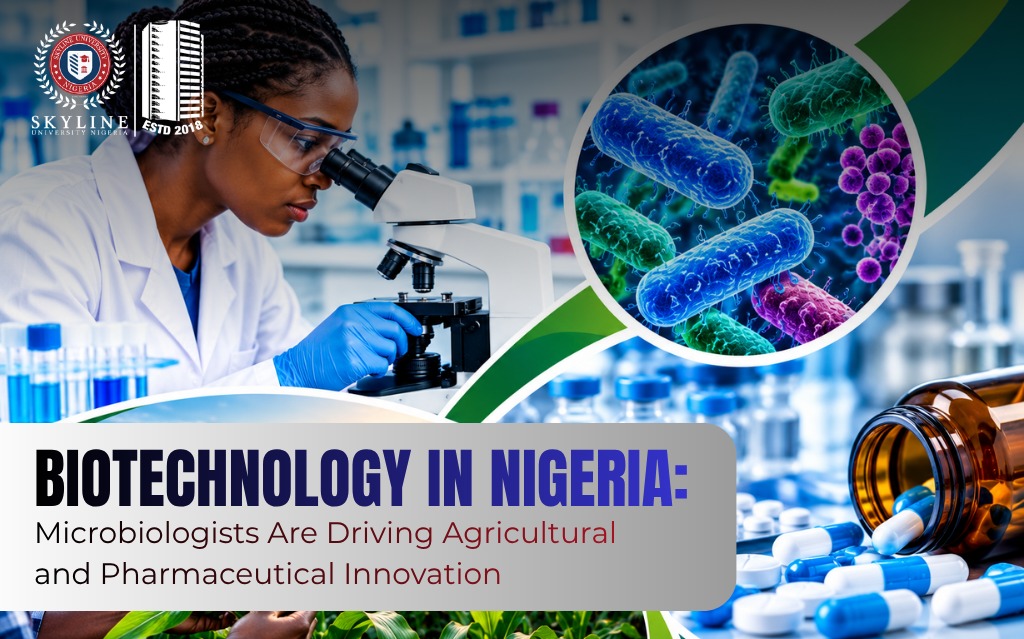
Biotechnology in Nigeria: How Microbiologists Are Driving Agricultural and Pharmaceutical Innovation.

Introduction Biotechnology is transforming the way we produce food, prevent diseases, and improve human health. It involves using living organisms, cells, or biological processes to develop useful products and technologies. In Nigeria, microbiologists play an important role in this transformation by studying microorganisms such as bacteria, fungi, and viruses and applying their knowledge to solve real-life problems. From improving soil fertility to discovering new medicines, microbiology is helping Nigeria explore locally available biological resources, strengthen food security, and support pharmaceutical development. Transforming Agriculture Through Microbial Biotechnology Agriculture remains an important part of Nigeria’s economy, providing food, employment, and income for millions of people. However, farmers face challenges such as declining soil fertility, crop diseases, and high costs of chemical fertilizers and pesticides. Microbiologists are addressing these challenges through the application of beneficial microorganisms. Certain bacteria, such as Rhizobium and Azotobacter, can improve the availability of nutrients in soil, particularly nitrogen, which plants need for healthy growth. Similarly, mycorrhizal fungi form beneficial relationships with plant roots, helping crops absorb water and essential minerals. These microorganisms can be developed into biofertilizers, offering farmers environmentally friendly alternatives or supplements to conventional fertilizers. Other beneficial microbes are used in the development of biopesticides, which help control agricultural pests and plant diseases while reducing dependence on synthetic chemicals. Microbiology also supports the production of fermented foods such as yoghurt, cheese, and traditional Nigerian food products. Through controlled fermentation, microorganisms improve food preservation, flavour, and, in some cases, nutritional quality. These applications create opportunities for local food processing, entrepreneurship, and employment. Advancing Pharmaceutical Innovation Microbiologists also contribute significantly to pharmaceutical research and healthcare development. Many important medicines originate from microorganisms. For example, Penicillium fungi are associated with the discovery of penicillin, one of the earliest antibiotics that transformed the treatment of bacterial infections. In Nigeria, microbiologists investigate bacteria, fungi, and other biological resources to identify potentially useful antimicrobial compounds. This research is particularly important because antimicrobial resistance, which occurs when microorganisms no longer respond effectively to medicines, threatens the successful treatment of infections. Microbiologists also contribute to vaccine research, disease diagnosis, quality control of pharmaceutical products, and the development of biological products. Through molecular biology, genetic engineering, and microbial biotechnology, researchers can investigate new approaches to disease prevention and treatment. The World Health Organization has identified local pharmaceutical, vaccine, and biological production as important components of Nigeria’s healthcare development. This creates opportunities for microbiologists, pharmacists, biotechnologists, and other scientists to collaborate in strengthening local research and manufacturing capacity. Building a Healthier and More Sustainable Nigeria Despite these opportunities, biotechnology development in Nigeria faces challenges, including inadequate research funding, limited laboratory infrastructure, and the need for stronger collaboration between universities, industries, and government agencies. Addressing these challenges requires sustained investment in scientific research, modern laboratory facilities, professional training, and the commercialization of research findings. Ultimately, biotechnology demonstrates that microorganisms are not merely agents of disease; they are valuable biological resources capable of improving human life. Through their contributions to agriculture, food production, medicine, and environmental sustainability, microbiologists are helping Nigeria develop practical solutions to national challenges. As Nigeria continues to strengthen its scientific and technological capacity, microbiologists will remain essential to building a more productive agricultural sector, a stronger pharmaceutical industry, and a healthier society. Figure 1. Application of microbial biotechnology in agriculture, food production, pharmaceutical research, and healthcare innovation in Nigeria. References Salisu, B. U., & Isiya, S. (2024). Biofertilizer production using phosphate-solubilizing Pseudomonas specie isolated from rhizosphere soil: Towards indigenous biofertilizer for enhanced crop productivity in Katsina, Nigeria. UMYU Journal of Microbiology Research, 9(1), 123-133. World Health Organization. (2024). A case study on the ecosystem for local production of pharmaceuticals, vaccines, and biologicals: the Nigeria context. World Health Organization. Oluwamakinde, E. P., Akpofure, O. D., Adeniran, S. O., & Fagbenro, O. S. (2026). Integrating advanced molecular biotechnology tools into toxicological research infrastructure for sustainable development in Nigeria. Discover Toxicology, 3(1), 1. written by/ Abdulsalam Mustapha Head of Department, Microbiology, Skyline University Nigeria  
Biotechnology in Nigeria: How Microbiologists Are Driving Agricultural and Pharmaceutical Innovation. Read More »

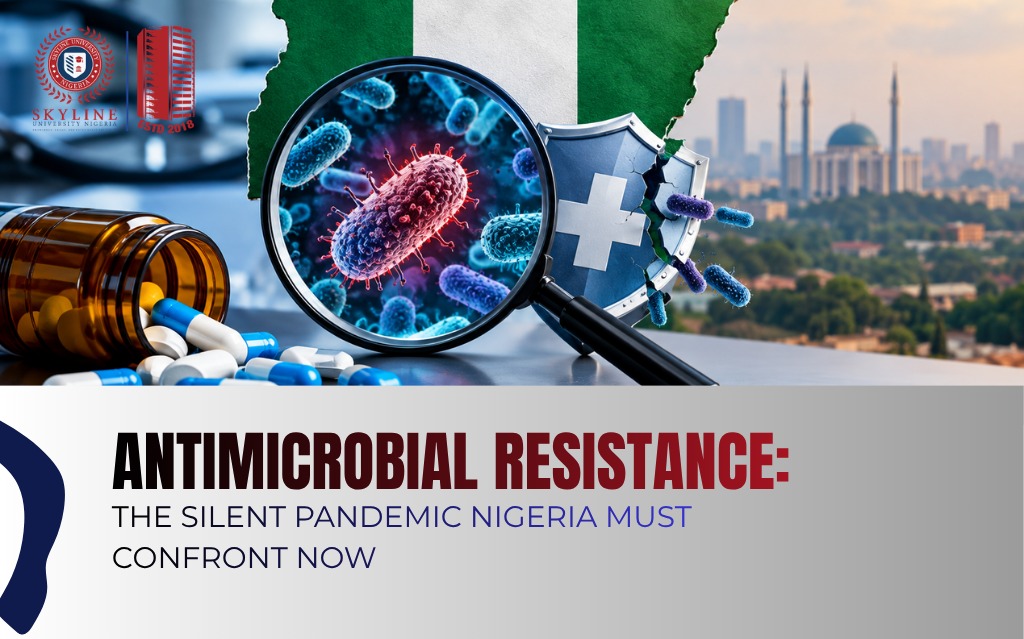
ANTIMICROBIAL RESISTANCE: THE SILENT PANDEMIC NIGERIA MUST CONFRONT NOW.

What happens when the medicine we trust to save a life stops working? A child develops pneumonia. A mother develops an infection after caesarean surgery. A patient arrives at the hospital with severe sepsis. The antibiotic that should have brought relief is administered, but the infection continues to worsen, another drug is tried and it fails too. This is not a scene from a distant future. It is the growing reality of antimicrobial resistance (AMR). Unlike COVID-19, AMR does not arrive with dramatic headlines, crowded isolation centers or daily statistics. It advances quietly in hospitals, communities, farms and the environment. Yet its consequences can be devastating. Resistant infections can turn ordinary illnesses into prolonged battles, increase hospital stays and healthcare costs, and ultimately claim lives. For Nigeria, the warning bells are already ringing. Antimicrobials have transformed modern medicine, but their effectiveness is being threatened by misuse and overuse. Unnecessary prescriptions, self-medication, inappropriate drug choices, incomplete treatment and the use of antibiotics when they are not needed all give micro-organisms opportunities to survive and develop resistance. And when antibiotics fail, the consequences extend far beyond the individual patient. Modern healthcare itself depends on effective antimicrobials. Caesarean sections, major surgeries, cancer chemotherapy, organ transplantation and the treatment of severe infections all become considerably more dangerous when common antibiotics can no longer be relied upon. The Medical Laboratory: Nigeria’s Critical Weapon Against AMR In this battle, one weapon deserves far greater attention: Medical laboratory diagnosis. Too often, infections are treated empirically without confirming their cause. But fever does not automatically mean a bacterial infection, and even when bacteria are responsible, the same antibiotic will not work against every organism. This is where the medical laboratory becomes indispensable. Through proper specimen collection, microscopy, culture, identification of microorganisms and antimicrobial susceptibility testing (AST), the medical laboratory provides the evidence needed to determine what is causing an infection and which antimicrobial is most likely to work. In simple terms, The Medical laboratory replaces guesswork with evidence. A medical laboratory result can prevent an unnecessary antibiotic from being prescribed. It can identify a resistant organism before it spreads. It can help a clinician move from a broad-spectrum antibiotic to a more targeted treatment. It can also provide the surveillance data needed to understand which resistant organisms are emerging and which antibiotics are losing their effectiveness. The medical laboratory scientist is therefore not merely a professional who analyses specimens. The Medical laboratory is part of the frontline defence against AMR. Unfortunately, diagnostic capacity remains inadequate in many settings. Some healthcare facilities lack functional microbiology laboratories, quality-assured reagents, appropriate equipment, trained personnel and reliable systems for transporting specimens. Where diagnosis is unavailable, empirical treatment becomes the default and antimicrobial resistance finds fertile ground. Nigeria must therefore place medical laboratory diagnosis at the heart of its AMR response. Investment in microbiology laboratories, medical laboratory scientists, quality assurance, diagnostic technologies, specimen referral systems and antimicrobial susceptibility testing is not an unnecessary expense. It is an investment in the survival of effective medicine. But Medical laboratories cannot fight AMR alone. Clinicians must prescribe responsibly. Pharmacists must promote appropriate antimicrobial use. Patients must stop self-medicating and using leftover antibiotics. Hospitals must strengthen infection prevention and control. Policymakers must enforce regulations and support surveillance. The agricultural and environmental sectors must also be part of the response. This is why AMR demands a “One Health Approach” because resistant microorganisms do not respect the boundaries between humans, animals and the environment. The choice before Nigeria is becoming increasingly clear. We can continue to respond to resistant infections after they have become difficult to treat, or we can invest now in prevention, surveillance and accurate diagnosis. The Medical laboratory gives us the ability to know before we guess, to target before we overuse, and to act before resistance becomes irreversible. AMR may be a silent pandemic, but Nigeria’s response must be loud, deliberate and immediate. “Because the greatest danger is not simply that antibiotics may become less effective. It is that one day, the patient may be standing before us, the diagnosis may be correct, the treatment may be urgently needed and the medicine may no longer work. That day must not become Nigeria’s reality. The time to act is now”.  WRITTEN BY. Mrs. Rabiatu Ibrahim Mahmud Lecturer II.Medical Laboratory Science.

ANTIMICROBIAL RESISTANCE: THE SILENT PANDEMIC NIGERIA MUST CONFRONT NOW. Read More »

From Idea to Investor: What Nigerian Startups Must Know Before Seeking Funding.

From Idea to Investor: What Nigerian Startups Must Know Before Seeking Funding For many Nigerian entrepreneurs, funding is an important step in turning an idea into a growing business. However, having a good idea is only the beginning. Investors want to see evidence that the problem is real, the market exists, customers need the solution and the business has the potential to grow.  From Idea to Evidence Before approaching investors, founders need to validate their ideas. They should understand the problem they are solving, who their customers are, how the problem is currently addressed and why their solution is different. Customer research, early users, sales, pilot programmes and partnerships can provide evidence that the business is solving a genuine problem. Know Your Funding Needs Not every startup needs the same type of funding. An early stage startup may need capital to develop and test its product, while a growing business may need funding to expand its team, technology or market. Founders should know exactly how much they need, what the money will be used for and what they expect to achieve with it. Funding should be connected to clear business milestones. Possible sources include grants, angel investors, accelerators, venture capital, debt and strategic investment. The Securities and Exchange Commission recognises different capital raising options depending on the nature and circumstances of the business. Get Your Business Investment Ready Investors will want to understand the company’s financial position, business model and ownership structure. Founders should therefore have accurate financial records and understand revenue, expenses, cash flow, burn rate and runway. They should also prepare for due diligence. Company registration documents, ownership records, contracts, intellectual property and relevant financial and regulatory documents should be properly organised. Understand the Investment Deal Receiving funding in exchange for equity means giving an investor part ownership of the company. Founders need to understand valuation, dilution, shareholder rights and other terms before accepting an investment. They should also research potential investors and consider their sector, investment stage, experience and the value they can bring beyond capital. Build a Clear Pitch A strong pitch should communicate the problem, solution, market, business model, traction, team, financial position and funding requirement clearly. The pitch should not simply describe an idea. It should show why the opportunity exists and why the team is capable of executing it. Understand the Nigerian Context Nigerian startups also need to understand the regulatory environment surrounding their businesses and fundraising activities. The Nigeria Startup Act 2022 established a framework for technology enabled startups, including startup labelling, the Startup Support and Engagement Portal and a Startup Investment Seed Fund for eligible startups. For regulated capital raising activities, founders must also consider the applicable Securities and Exchange Commission requirements. Is a Means, Not the Destination Raising capital is not the final goal. The purpose of funding is to help the business achieve specific objectives and build a sustainable company. For Nigerian founders, moving from idea to investor therefore requires more than confidence in an idea. It requires market evidence, financial understanding, preparation, a clear funding plan and an understanding of what investment means for the future of the business. The stronger the preparation, the more meaningful the conversation with potential investors can become. References Securities and Exchange Commission Nigeria.* Raising Capital. [SEC Nigeria](https://home.sec.gov.ng/for-businesses/raising-capital/?utm_source=chatgpt.com) Federal Republic of Nigeria.* Nigeria Startup Act 2022. [Nigeria Startup Act 2022](https://www.startup.gov.ng/doc/NIGERIA_STARTUP_ACT_2022_Final_Publication.pdf?utm_source=chatgpt.com) Startup Nigeria.* Startup Support and Engagement Portal. [Startup Nigeria](https://www.startup.gov.ng/about?utm_source=chatgpt.com)

From Idea to Investor: What Nigerian Startups Must Know Before Seeking Funding. Read More »

Research Skills in the Age of AI: How to Use Technology Without Losing Your Academic Integrity.

Artificial intelligence is rapidly changing the way students and researchers search for information, develop ideas, and communicate their findings. From discovering academic literature to improving the clarity of written work, AI tools can make research faster and more efficient. However, the convenience they offer also creates an important responsibility: AI should support human thinking, not replace it. The most responsible approach is to treat artificial intelligence as a research assistant. It can help researchers brainstorm ideas, identify gaps, organise information, and improve writing, while the researcher remains responsible for the arguments, analysis, evidence, and final conclusions. Using AI Ethically in Research One useful application of AI is brainstorming and outlining. Researchers can use AI as a discussion partner to explore different perspectives, generate possible research questions, identify counterarguments, or organise scattered notes into a clearer structure. The purpose is not to allow AI to develop the entire argument, but to use it to stimulate and organise the researcher’s own thinking. AI can also assist with literature discovery. Platforms such as Elicit and ResearchRabbit can help researchers discover relevant studies and understand how different publications connect within a field. However, finding a paper is only the beginning. Researchers should read the original publications and assess their methodology, evidence, findings, and relevance before relying on them. Another practical application is language and writing support. Tools such as Grammarly can help identify grammatical errors, improve clarity, and refine the presentation of academic writing. However, researchers should ensure that such tools do not alter the meaning of their arguments or replace their own intellectual contribution. Protecting Academic Integrity The use of AI in research also requires careful verification. AI systems can produce inaccurate information, incomplete summaries, or references that do not exist. Every important fact, quotation, citation, and research claim should therefore be checked against the original source. Transparency is equally important. Researchers should acknowledge significant use of AI where required and document how the technology contributed to their research process. This makes the role of AI clear and helps maintain trust in academic work. Most importantly, researchers must maintain cognitive control. Critical thinking, data interpretation, evaluation of evidence, and final decision-making should remain human responsibilities. Overdependence on AI may make research more convenient, but it can also weaken the skills that academic research is designed to develop. Ultimately, the goal is not to choose between artificial intelligence and human intelligence. It is to use both responsibly. AI can help researchers work more efficiently, but expertise, judgment, curiosity, and intellectual integrity must remain at the centre of the research process. References QuillKi. How to Use AI for Academic Research Without Losing Academic Integrity. Source article American Psychological Association. Learning Artificial Intelligence. APA resource ResearchRabbit. Research Literature Discovery and Mapping. ResearchRabbit Elicit. AI Research Assistant for Literature Review and Research. Elicit ResearchGate. Preserving Academic Integrity in the Age of AI: Navigating Challenges and Exploring Solutions. ResearchGate publication ScienceDirect. Research on the Use of AI and Writing Support Tools. ScienceDirect article Grammarly. Writing and Grammar Assistance. Grammarly  

Research Skills in the Age of AI: How to Use Technology Without Losing Your Academic Integrity. Read More »

Forensic Accounting: Nigeria’s Secret Weapon Against Corruption

Nigeria loses staggering sums to corruption every year, yet convictions of high-profile offenders remain rare and asset recoveries are frequently disputed. Traditional auditing, designed to check compliance rather than uncover deliberate deception, has repeatedly proven too blunt an instrument for a problem this calculated and this well concealed. Forensic accounting, which fuses accounting, investigation and courtroom-ready evidence, has emerged as one of the few tools capable of following money through the shell companies, ghost workers and inflated contracts that corrupt officials use to disguise theft. The scale of the problem shows up clearly in Nigeria’s standing on Transparency International’s Corruption Perceptions Index (CPI), which scores 180 countries from 0 (highly corrupt) to 100 (very clean). Nigeria has hovered in the mid-twenties for most of the past decade, ranking 140th out of 180 countries in 2024 with a score of 26 before slipping slightly to 142nd in 2025 despite holding the same score (Transparency International, cited in The Guardian Nigeria, 2025; Trading Economics, 2025). A Decade of Stagnation As Figure 1 and Table 1 show, Nigeria’s CPI score has barely moved since 2019, drifting between 24 and 26 points while its global rank swung from 146th to a low of 154th in 2021 before recovering to 140th in 2024 (ICIR, 2025; Trading Economics, 2025). That flat trend line is precisely why anti-graft agencies have leaned so heavily on forensic accounting: conventional bookkeeping and statutory audits have not moved the needle, so investigators have turned to techniques built specifically to expose concealment rather than merely confirm compliance. Figure 1: Nigeria’s CPI score and global rank, 2019-2025. Source: Transparency International, compiled via ICIR (2025) and Trading Economics (2025). Table 1: Nigeria’s Corruption Perceptions Index, 2019-2025 Year CPI Score (/100) Global Rank (of 180) 2019 26 146 2020 25 149 2021 24 154 2022 24 150 2023 25 145 2024 26 140 2025 26 142 From Bookkeeping to Bloodhound Forensic accounting differs from a routine audit in both purpose and method. Okoye and Gbegi (2013) describe it as the application of accounting, auditing and investigative skills to matters that may end up in a courtroom, meaning every finding must be defensible as legal evidence rather than a management footnote. Modugu and Anyaduba (2013), in an early empirical study of Nigerian practitioners, found that forensic accounting significantly improves the detection and reduction of financial fraud precisely because it targets intent, not just error. In practice, Nigeria’s Economic and Financial Crimes Commission (EFCC) and Independent Corrupt Practices Commission (ICPC) draw on a common toolkit, summarised in Table 2. Table 2: Selected forensic accounting techniques used by Nigerian anti-graft agencies Technique What It Does Lifestyle audit Compares an official’s visible assets and spending with declared income to flag unexplained wealth. Forensic data analytics Mines payroll, procurement and bank-transfer data for duplicate payments, ghost workers and round-tripped funds. Asset tracing Follows the movement of stolen funds through shell companies, real estate and offshore accounts. Net-worth analysis Reconstructs an individual’s true financial position over time to prove illicit enrichment in court. Litigation support Packages financial evidence into reports and expert testimony usable in EFCC/ICPC prosecutions. Evidence That It Works – With Caveats There is measurable payoff. A 2025 case-study review of EFCC prosecutions found that forensic accounting techniques were successfully applied in roughly 80 percent of the cases examined, contributing directly to convictions and the recovery of misappropriated funds (International Institute of Academic Research and Development, 2025). High-profile matters, from the NDDC scandal to the prosecution of a former Central Bank governor, have relied on forensic reconstruction of financial trails rather than confession or eyewitness testimony (Premium Times, 2020; BBC News, 2023). Yet recoveries do not always translate into transparency. In 2026, the EFCC announced the recovery of ₦1.233 trillion in corruption-linked assets, but independent forensic review of the announcement found that the agency withheld the granular ledger needed to verify who received restitution and on what basis, illustrating that generating forensic evidence is only half the accountability equation (The Digger, 2026). What Still Holds It Back Nigerian researchers point to structural gaps rather than a failure of the method itself. A study published in the International Journal of Research and Innovation in Social Science found that the EFCC has no dedicated forensic accounting department, and that firms with genuine forensic expertise are rarely engaged to support investigations (RSIS International, 2023). A separate 2025 review noted that public awareness of forensic accounting remains low, which limits both its preventive value and the political pressure to fund it properly (IIARD, 2025). The Path Forward None of this makes forensic accounting a failed experiment; it makes it an underused one. Embedding forensic units directly inside EFCC and ICPC, mandating forensic audits for high-risk procurement, and publishing recovery data in a verifiable format would convert isolated prosecutorial wins into a systemic deterrent. Nigeria’s stagnant CPI score suggests that awareness campaigns and new legislation alone will not move the trend line. Institutionalising forensic accounting, and making its findings public rather than discretionary, is the more realistic route to finally shifting it. References BBC News (2023). Godwin Emefiele: Nigeria’s suspended central bank governor charged. ICIR (2025). Nigeria ranked 140th in global corruption index. International Centre for Investigative Reporting. IIARD (2025). Forensic Accounting Techniques as Tools for Nigerian Public Sector Fraud Reduction. International Journal of Accounting and Financial Management, 11(3), 146-157. Modugu, K. P., & Anyaduba, J. O. (2013). Forensic accounting and financial fraud in Nigeria: An empirical approach. International Journal of Business and Social Science, 4(7), 281-289. Okoye, E. I., & Gbegi, D. O. (2013). Forensic Accounting: A Tool for Fraud Detection and Prevention in the Public Sector. Premium Times (2020). NDDC scandal and school feeding programme fraud reports. RSIS International (2023). Forensic Accounting Techniques and White-Collar Crime in Nigeria Public Sector. International Journal of Research and Innovation in Social Science. The Digger (2026). Unraveling the Recovery Narrative: A Forensic Analysis of Nigeria’s ₦1.233 Trillion Corruption Recovery Claims. The Guardian Nigeria (2025). Nigeria improves ranking in 2024 global corruption index. Trading Economics (2025).

Forensic Accounting: Nigeria’s Secret Weapon Against Corruption Read More »

Beyond the Classroom: Why General Knowledge Matters for University Students

University education is not only about passing examinations or earning a degree. It is also about becoming an informed, confident, and well-rounded individual who understands the world beyond their chosen field of study. This is where general knowledge becomes important. For university students, having a broad understanding of current affairs, history, technology, culture, science, economics, and society can make a significant difference. A student studying Law, for example, benefits from understanding politics, economics, technology, and social issues because these areas often influence the legal system. Similarly, a student studying Computer Science can benefit from understanding business, ethics, and global developments in technology. General knowledge also improves communication and confidence. Students who are informed about what is happening around them are often better prepared to participate in classroom discussions, debates, interviews, presentations, and professional conversations. Knowing a little about different subjects can also help students connect with people from different backgrounds. In today’s rapidly changing world, staying informed is more important than ever. Artificial intelligence, climate change, global business, digital security, economic developments, and emerging technologies are constantly reshaping society. Students who make a habit of reading, asking questions, listening to credible sources, and exploring new ideas are better positioned to understand these changes. General knowledge does not mean memorising endless facts. It is about developing curiosity. It means knowing enough to ask better questions, understand different perspectives, and make informed decisions. University students can build their general knowledge in simple ways: reading newspapers and credible online publications, following educational platforms, attending seminars, engaging in debates, watching documentaries, learning about different cultures, and having meaningful conversations with people outside their areas of study. Ultimately, a university graduate should leave school with more than a certificate. Education should expand the mind, broaden perspective, and prepare students to engage intelligently with the world around them.  In a world where knowledge is constantly evolving, the most valuable habit a student can develop may simply be the willingness to keep learning.

Beyond the Classroom: Why General Knowledge Matters for University Students Read More »

BUILDING SOFTWARE FOR AFRICA: WHY NIGERIAN DEVELOPERS ARE SHAPING THE CONTINENT’S DIGITAL FUTURE

“The next billion-dollar African technology company may already be taking shape not in Silicon Valley, but in a university classroom where a young software engineering student is learning how to solve real-world problems with code.”  Africa’s Digital Story Is Being Written One Line of Code at a Time Across Africa, a remarkable transformation is unfolding. The way we pay for goods, communicate with businesses, access healthcare, learn online, save money, and even interact with government services has changed dramatically over the past decade. Behind this transformation lies something many people never see: thousands of software engineers working tirelessly to build the digital systems that power modern life. At the center of this revolution is Nigeria. Once known primarily for its entrepreneurial spirit, Nigeria has rapidly become one of Africa’s leading technology hubs a nation producing innovative software solutions that are solving local challenges while attracting global recognition. Nigerian developers are no longer simply participating in the global digital economy; they are helping to shape it. For young people wondering where they can make the greatest impact in the coming decades, software engineering stands out as one of the most powerful answers. From Local Ideas to Continental Impact Some of Africa’s most celebrated technology companies share one important characteristic: they were built by talented software engineers who believed that African problems deserved African solutions. Platforms such as Flutter wave, Pay stack, Monie point, and Cowry wise have transformed how millions of individuals and businesses manage money. Their innovations have simplified payments, expanded financial inclusion, supported entrepreneurs, and strengthened digital commerce across the continent. These companies are more than successful businesses they are proof that ideas developed in Nigeria can influence economies across Africa and compete on the global stage. Every secure payment processed, every investment made through a mobile application, and every digital financial transaction represents thousands of hours of software design, testing, engineering, and continuous improvement. Behind every breakthrough is a software engineer who chose to build rather than simply consume technology. Nigeria’s Moment Has Arrived Over the past decade, Nigeria’s technology ecosystem has experienced unprecedented growth. With more than $2 billion in startup funding attracted over recent years, the country has become one of Africa’s leading destinations for technology investment. International venture capital firms, global technology companies, and innovation partners increasingly recognize Nigerian talent as one of the continent’s greatest competitive advantages. This momentum has created exciting opportunities for software engineers across multiple sectors, including: Financial Technology (FinTech) Artificial Intelligence Healthcare Technology Educational Technology Agriculture Technology Logistics and Transportation Cyber security Enterprise Software E-commerce Cloud Computing As digital transformation accelerates across every industry, organizations are searching for professionals who can design secure, scalable, and intelligent software solutions. The demand has never been greater. More Than Coding Engineering Solutions That Change Lives When many people hear the words software engineering, they imagine someone sitting behind a computer writing code. The reality is far more inspiring. Software engineers solve problems. They build applications that connect rural communities to healthcare services. They develop platforms that allow students to learn from anywhere in the world. They create systems that help farmers increase productivity, businesses reach new markets, and governments deliver better public services. Every application begins with a simple question: “How can technology improve people’s lives?” Answering that question requires creativity, critical thinking, teamwork, and a deep understanding of both technology and human needs. That is what makes software engineering one of the most meaningful professions of our time. The Skills That Define Tomorrow’s Engineers Today’s software industry moves quickly, and employers seek graduates who are ready to contribute from day one. Modern software engineers are expected to understand technologies such as: Mobile application development Web application development API design and integration Cloud computing Artificial Intelligence and Machine Learning integration Database systems Cybersecurity principles Software testing and quality assurance DevOps and automation User experience (UX) design Collaborative software development using industry-standard tools These skills enable graduates to create applications that are secure, reliable, scalable, and capable of serving millions of users. The most successful engineers combine technical expertise with curiosity, adaptability, communication skills, and a commitment to lifelong learning. Why University Education Makes the Difference In an age where countless programming tutorials are available online, some people wonder whether a university degree is still necessary. The answer lies in the difference between learning to code and learning to engineer. Programming teaches you how to write software. Software Engineering teaches you how to design systems that remain secure, efficient, maintainable, and scalable for years to come. A structured Bachelor of Science in Software Engineering develops a comprehensive understanding of algorithms, software architecture, databases, operating systems, cybersecurity, cloud technologies, artificial intelligence, project management, ethics, and software quality assurance. Just as importantly, students learn how to work collaboratively, manage complex projects, communicate technical ideas effectively, and solve problems systematically. These are the qualities employers consistently value. Learning Beyond the Classroom The world’s best software engineers never stop learning. Many strengthen their skills by contributing to open-source software projects, collaborating with developers from different countries, participating in hackathons, building personal applications, and sharing knowledge through developer communities. Open-source contributions have become one of the strongest indicators of practical software engineering ability. They demonstrate initiative, collaboration, technical competence, and a willingness to solve problems for a global audience. For Nigerian students, these opportunities provide international visibility long before graduation. A Career Without Borders Perhaps one of the greatest advantages of software engineering today is that talent is no longer limited by geography. A graduate living in Kano can contribute to projects for companies in New York, London, Berlin, Dubai, Johannesburg, or Singapore. Remote work has transformed the technology industry. Organizations increasingly recruit software engineers based on their skills, portfolios, and ability to solve problems not simply where they live. This global shift has opened extraordinary opportunities for Nigerian developers. Today, many software engineers build products used by millions of people worldwide while continuing to live and work in Nigeria. Their offices may be local. Their impact is

BUILDING SOFTWARE FOR AFRICA: WHY NIGERIAN DEVELOPERS ARE SHAPING THE CONTINENT’S DIGITAL FUTURE Read More »

Sports and Physiotherapy: The Growing Demand for Movement Health Professionals in Nigeria.

  Introduction Sports is an important part of Nigerian society, involving professional athletes, university students, school children, and recreational participants. As participation in football, athletics, basketball, wrestling, boxing, fitness, and other sports increases, there is a growing need for professionals who can promote safe movement, prevent injuries, manage sports-related conditions, and support rehabilitation. Physiotherapists are central to this emerging movement-health profession. Their role has expanded from treating injuries to include injury prevention, performance support, rehabilitation, and safe return to sport. The Role of Physiotherapy in Sports Sports physiotherapists contribute throughout an athlete’s journey, including: Injury prevention and risk assessment Management of acute and chronic sports injuries Therapeutic exercise and rehabilitation Strength, flexibility, balance, and mobility training Movement assessment and correction Return-to-training and return-to-sport programmes Athlete education and injury prevention Performance and recovery support Common sports conditions managed by physiotherapists include ankle sprains, knee injuries, hamstring strains, muscle injuries, tendinopathies, shoulder injuries, and low-back pain. The modern approach focuses not only on treating an injury but also on identifying risk factors and helping athletes remain healthy and physically active. Growing Opportunities in Nigeria The expansion of sports and fitness activities in Nigeria is creating opportunities for physiotherapists in: Professional sports clubs Universities and schools Sports academies Fitness centres and gyms Sports medicine clinics National and state sports associations Private physiotherapy practices Sports research and academic institutions Physiotherapists can also contribute to recreational fitness by helping individuals exercise safely and manage musculoskeletal problems. Importance of Multidisciplinary Practice Modern sports healthcare requires collaboration. Physiotherapists work alongside sports physicians, orthopaedic surgeons, sports scientists, strength and conditioning specialists, nutritionists, psychologists, and coaches. This multidisciplinary approach helps athletes achieve better health, performance, and safe return to competition. Challenges in Nigeria Despite the growing need, sports physiotherapy faces several challenges, including: Limited awareness of the full role of physiotherapists Inadequate sports rehabilitation facilities Limited integration of physiotherapists into some sports teams Financial constraints Limited sports injury surveillance and research Need for more specialist training in sports rehabilitation and performance Addressing these challenges requires stronger investment in education, infrastructure, research, professional development, and collaboration between universities and sporting organizations. The Future of Sports Physiotherapy Nigerian universities have an important role in preparing future sports physiotherapists. Training should provide students with practical experience in sports injury assessment, biomechanics, exercise therapy, rehabilitation, injury prevention, strength and conditioning, and return-to-sport programmes. Universities can also collaborate with sports clubs and organizations to provide clinical placements, injury-screening programmes, research opportunities, and athlete support. Conclusion The future of Nigerian sports depends not only on identifying talented athletes but also on keeping them healthy and physically capable of performing at their best. Physiotherapists are therefore becoming increasingly important as movement health professionals. The profession is moving from a traditional focus on treating injuries toward a broader role involving prevention, rehabilitation, performance optimization, and lifelong movement health. Nigeria needs not only more athletes, but also more skilled professionals who can protect, restore, and optimize the movement that makes sporting achievement possible. Written By, Mr. Yusuf Usman Lecturer II Department of Physiotherapy School of Basic Medical Sciences    

Sports and Physiotherapy: The Growing Demand for Movement Health Professionals in Nigeria. Read More »

Cybersecurity in Nigeria: Why Your Bank Account, Business, and Personal Data Are at Risk Right Now

Nigeria’s rapid digital transformation has brought significant opportunities in online banking, e-commerce, digital payments, and mobile communication. Millions of Nigerians rely on digital platforms every day for financial transactions, education, healthcare, and business operations. However, this increasing dependence on technology has also made individuals and organizations prime targets for cybercriminals. Cybersecurity is no longer just an IT concern—it is a personal, business, and national security issue. Cybercriminals are using increasingly sophisticated methods to steal sensitive information and money. Phishing emails, fake banking websites, fraudulent SMS messages, social media scams, ransomware, identity theft, and malware attacks have become common across the country. Victims often receive convincing messages that appear to come from trusted banks or government agencies, encouraging them to click malicious links or reveal confidential information such as passwords, One-Time Passwords (OTPs), or Bank Verification Numbers (BVNs). Businesses, particularly small and medium-sized enterprises (SMEs), are equally vulnerable. Many organizations lack strong cyber security policies, employee awareness training, and secure data protection measures. A single successful cyber attack can result in financial losses, operational disruption, reputational damage, and legal consequences. Educational institutions, healthcare organizations, and government agencies also face increasing threats due to the large volumes of sensitive information they manage. Protecting yourself begins with practicing good cyber hygiene. Individuals should use strong and unique passwords, enable multi-factor authentication (MFA), regularly update software, avoid clicking suspicious links, and verify the authenticity of emails and messages before responding. It is equally important to monitor bank accounts regularly and report suspicious transactions immediately. Organizations should invest in cybersecurity awareness programs, implement secure backup strategies, deploy modern security solutions, and conduct regular vulnerability assessments. As Nigeria continues to embrace the digital economy, protecting our bank accounts, businesses, and personal information must become a shared responsibility. Staying informed, practicing safe online behavior, and investing in cybersecurity are essential steps toward building a secure digital future for individuals, organizations, and the nation as a whole.   Written by: Dr. A. Syed Haroon  

Cybersecurity in Nigeria: Why Your Bank Account, Business, and Personal Data Are at Risk Right Now Read More »

Understanding Inflation in Nigeria: A Graduate-Level Analysis for Students and Professionals

  “When the value of money falls, the value of knowledge rises.” Are Nigerians Really Earning More or Simply Becoming Poorer More Expensively? Imagine receiving a salary increase at the beginning of the year. Your family celebrates, believing life will become easier. Yet, within months, you discover that the extra income no longer covers groceries, transport, rent, electricity, internet subscriptions, or even the cost of printing a research project. Your salary has increased, but your standard of living has quietly declined. This is the reality of inflation. Inflation is more than an economic statistic announced on the news; it is a force that shapes everyday life. It influences how households spend, how businesses invest, how students finance their education, and how governments design economic policies. Behind every inflation figure lies a human story: the entrepreneur struggling to restock inventory, the pensioner watching savings lose value, the manufacturer delaying expansion, and the university student choosing between textbooks and transportation. Although inflation affects everyone, it remains one of the most misunderstood concepts in economics. Many people equate it with “high prices,” overlooking the structural and policy factors that sustain rising costs over time. “Inflation is not merely about rising prices; it is about shrinking possibilities. Every increase in prices quietly reshapes household budgets, business strategies, and national development priorities.” The question is no longer whether inflation affects us, but whether we truly understand how it influences our financial decisions and what can be done about it. What Exactly Is Inflation? Ask ten Nigerians what inflation means, and most will simply say, “Everything is expensive now.” While true, that explanation captures only the symptom, not the phenomenon. Inflation is a persistent increase in the general price level of goods and services, resulting in a decline in the purchasing power of money. It is not the price increase of a single commodity. For example, if tomato prices rise because flooding destroys farms, that is a temporary supply shock. Inflation occurs when price increases spread across many sectors and persist over time. Consider a student receiving ₦20,000 monthly in 2022. At that time, the allowance might comfortably cover transport, meals, internet data, and study materials. Two years later, the same ₦20,000 buys significantly less. The amount has not changed, but its purchasing power has declined. This illustrates the difference between nominal income (the amount received) and real income (what that income can actually buy). A 10% salary increase means little if prices rise by 30%; in real terms, the worker has become poorer. Economists often describe inflation as an “invisible tax.” Unlike government taxes, inflation quietly erodes purchasing power without direct payment. Households respond by buying fewer goods, switching to cheaper alternatives, postponing major purchases, or reducing consumption altogether.   Understanding Purchasing Power Money derives its value from what it can purchase. When inflation rises, purchasing power falls. Year Monthly Income (₦) Monthly Cost of Living (₦) Purchasing Power 2022 150,000 120,000 Comfortable surplus 2026 180,000 210,000 Reduced purchasing power Although income increased by ₦30,000, living costs rose by ₦90,000. The household therefore became poorer despite earning more. Did You Know? Higher salaries do not necessarily improve living standards. What matters is whether income grows faster than inflation. Why Does Inflation Happen? Inflation is rarely caused by a single factor. It reflects the interaction of demand, production costs, exchange-rate movements, government policies, and external shocks. Demand-Pull Inflation Demand-pull inflation occurs when demand grows faster than supply. As consumers compete for limited goods and services, businesses raise prices. Rising incomes, increased government spending, and easier access to credit can all contribute to this form of inflation. Cost-Push Inflation Prices also rise when production becomes more expensive. In Nigeria, manufacturers face higher electricity tariffs, diesel prices, transportation costs, wages, and imported raw material expenses. These higher costs are often passed on to consumers. Imported Inflation Nigeria imports many production inputs, including machinery, pharmaceuticals, electronics, and industrial materials. When global prices rise or the naira depreciates, imported goods become more expensive, increasing domestic production costs and consumer prices. Exchange Rate Depreciation A weaker naira means importers require more local currency to purchase foreign goods. Since many Nigerian industries depend on imported inputs, exchange-rate depreciation quickly raises production costs across sectors ranging from manufacturing to healthcare. Food Insecurity and Climate Shocks Food inflation is influenced not only by economic conditions but also by flooding, drought, insecurity, poor infrastructure, and supply-chain disruptions. Reduced agricultural output and transport challenges limit food availability, pushing prices upward. Think About This If inflation results from multiple interconnected factors, can higher interest rates alone solve the problem, or does Nigeria need broader structural reforms in agriculture, infrastructure, security, and industrial productivity? Nigeria’s Inflation Journey: More Than a Monetary Issue Nigeria’s inflation reflects more than excessive money supply. It is shaped by structural weaknesses, external shocks, and policy adjustments. Historically, inflation has responded to oil price fluctuations, exchange-rate changes, fiscal deficits, food supply disruptions, and monetary policy decisions. The COVID-19 pandemic intensified these pressures by disrupting global supply chains and increasing transportation costs. More recently, exchange-rate reforms, fuel subsidy removal, and broader macroeconomic adjustments have raised transportation and production costs, contributing to higher consumer prices. In response, the Central Bank of Nigeria has tightened monetary policy by increasing interest rates to moderate inflationary pressures. However, many economists argue that monetary policy alone cannot address inflation driven by structural challenges such as food insecurity, infrastructure deficits, and exchange-rate volatility. Nigeria’s experience demonstrates that inflation is not simply “too much money chasing too few goods.” It also reflects an economy’s capacity to produce efficiently, absorb shocks, and implement sound economic policies. Who Wins and Who Loses During Inflation? Inflation is often described as a “silent tax” because it steadily erodes purchasing power without requiring direct payment. However, unlike conventional taxes, its effects are uneven. The critical question is not whether inflation occurs, but who can adjust faster than prices rise. Households on fixed incomes including pensioners, students, and many civil servants are usually the hardest hit. Their

Understanding Inflation in Nigeria: A Graduate-Level Analysis for Students and Professionals Read More »