Skyline University Nigeria

Author name: ASMAU UBA MUHAMMAD

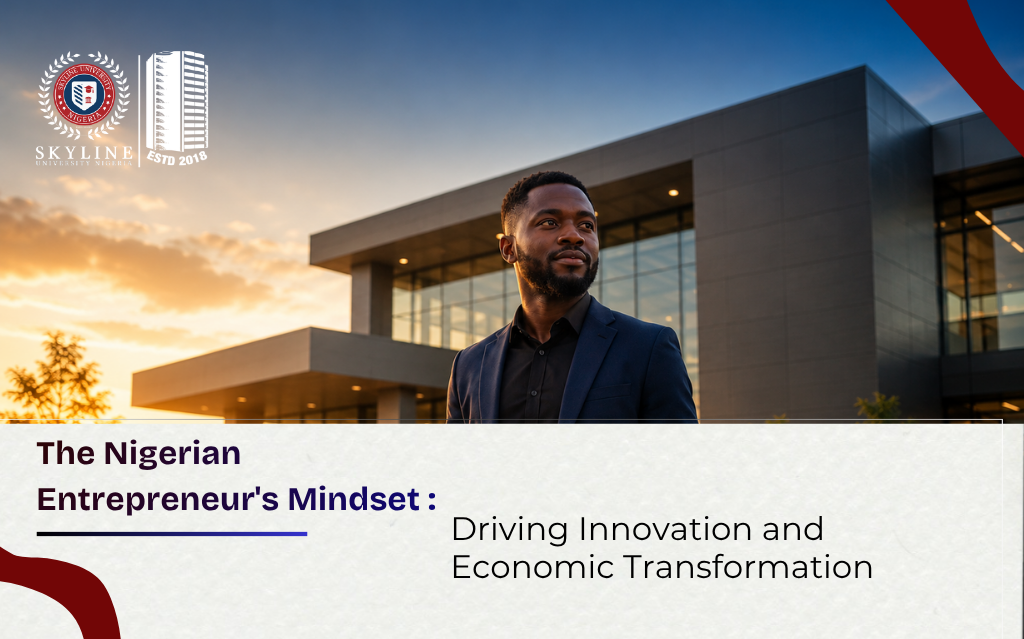
The Nigerian Entrepreneur’s Mindset: Driving Innovation and Economic Transformation.

Entrepreneurship has emerged as one of the most powerful forces for economic development in Nigeria. In the face of rising unemployment, economic uncertainty, technological advancement, and increasing consumer demands, Nigerian entrepreneurs have demonstrated remarkable ingenuity in creating businesses that generate wealth, provide employment, and solve societal problems. Unlike entrepreneurs in more stable economies, Nigerian business owners often operate in an environment characterized by inadequate infrastructure, inconsistent government policies, foreign exchange volatility, and limited access to affordable financing. Consequently, the Nigerian entrepreneur’s mindset is distinguished by resilience, innovation, adaptability, opportunity recognition, calculated risk-taking, and a commitment to continuous learning. Resilience is perhaps the most defining characteristic of the Nigerian entrepreneur. Businesses frequently encounter challenges such as unstable electricity supply, inflation, insecurity in some regions, rising production costs, fluctuating exchange rates, and limited access to finance. Despite these obstacles, successful entrepreneurs persist by developing alternative strategies and maintaining a long-term vision. For example, many small and medium-sized enterprises (SMEs) in Nigeria have adapted to unreliable electricity by investing in generators, solar energy systems, or hybrid power solutions to ensure uninterrupted production and service delivery. Similarly, during periods of high inflation and currency depreciation, many entrepreneurs source raw materials locally, diversify their suppliers, adjust pricing strategies, or redesign their products to reduce production costs while maintaining quality. These practical responses demonstrate that resilience is not merely the ability to endure hardship but the capacity to adapt, innovate, and continue creating value despite a challenging business environment. Such resilience enables Nigerian entrepreneurs to sustain their operations, remain competitive, and contribute to economic growth even under difficult circumstances. Another defining feature of the Nigerian entrepreneurial mindset is the ability to identify opportunities where others see challenges. Entrepreneurs recognize unmet market needs and develop innovative solutions that create value for consumers. Nigeria’s rapidly growing financial technology (fintech) industry provides an excellent illustration of this mindset. Companies such as OPay and Moniepoint identified the growing demand for accessible, fast, and reliable financial services, particularly among individuals and small businesses that were underserved by traditional banking institutions. By leveraging digital technology and extensive agent banking networks, these companies made it easier for millions of Nigerians to transfer money, pay bills, receive payments, and access basic financial services, especially in rural and underserved communities. Their ability to recognize gaps in financial inclusion and develop practical, technology-driven solutions has transformed the way financial transactions are conducted in Nigeria. The rapid growth and widespread adoption of OPay and Moniepoint demonstrate how identifying market opportunities and responding with innovative solutions can create highly successful and impactful businesses. Innovation also plays a central role in entrepreneurial success. Nigerian entrepreneurs are increasingly moving beyond simply selling products to creating innovative business models and technology-driven solutions. Interswitch revolutionized electronic payments by introducing integrated payment infrastructure that supports banking, retail transactions, and government services. Similarly, entrepreneurs in agriculture have adopted precision farming, digital marketplaces, and value-added processing to improve productivity and reduce post-harvest losses. These innovations not only improve profitability but also address critical national development challenges such as financial inclusion and food security. Adaptability is another essential component of the Nigerian entrepreneur’s mindset. The business environment changes rapidly due to inflation, policy reforms, technological disruption, changing consumer preferences, and fluctuations in the value of the naira. Entrepreneurs who adapt quickly are more likely to survive and grow. For example, following Nigeria’s 2023 foreign exchange reforms and fuel subsidy removal, BUA Foods Plc responded to rising production costs by increasing local sourcing, improving operational efficiency, and expanding local manufacturing. These strategic adjustments enabled the company to remain competitive despite the challenging economic environment, demonstrating how adaptability is essential for long-term business success. Calculated risk-taking distinguishes successful entrepreneurs from ordinary business owners. Every entrepreneurial venture involves uncertainty, yet successful Nigerian entrepreneurs evaluate risks carefully before making investment decisions. Rather than avoiding uncertainty altogether, they conduct market research, prepare business plans, diversify income streams, and implement effective financial management practices. This strategic approach allows them to pursue growth opportunities while minimizing potential losses. Continuous learning is equally important in sustaining entrepreneurial success. The rapid pace of technological advancement, globalization, and evolving consumer behavior requires entrepreneurs to continually update their knowledge and skills. Many Nigerian entrepreneurs participate in executive education programs, business incubation centers, mentorship initiatives, and professional networking events. Organizations such as the Tony Elumelu Foundation have supported thousands of African entrepreneurs by providing training, mentorship, seed funding, and access to global business networks. Such initiatives strengthen entrepreneurial capabilities and improve business sustainability. Ethical leadership and social responsibility have also become increasingly important elements of the Nigerian entrepreneurial mindset. Modern entrepreneurs recognize that long-term business success depends not only on profitability but also on creating value for society. Many businesses invest in employee development, environmental sustainability, community empowerment, and corporate social responsibility initiatives. These practices enhance customer trust, strengthen corporate reputation, and contribute to sustainable national development. In conclusion, The Nigerian entrepreneur’s mindset is a powerful combination of resilience, opportunity recognition, innovation, adaptability, calculated risk-taking, continuous learning, and ethical leadership. These qualities enable entrepreneurs to navigate Nigeria’s dynamic and often challenging business environment while creating sustainable businesses that contribute to economic growth and social development. As demonstrated by companies such as OPay, Moniepoint, Interswitch, and BUA Foods, successful entrepreneurs do not merely respond to challenges—they transform them into opportunities for innovation and value creation. Beyond generating profits, they create employment, promote financial inclusion, stimulate technological advancement, and improve the well-being of communities through socially responsible business practices. As Nigeria continues to diversify its economy and strengthen its entrepreneurial ecosystem, cultivating this mindset among aspiring entrepreneurs will be critical to fostering innovation, enhancing business competitiveness, reducing unemployment, and achieving sustainable national development.   Author : Ms. Aisha Ibrahim Turaki

The Nigerian Entrepreneur’s Mindset: Driving Innovation and Economic Transformation. Read More »

Skyline University Nigeria Signs MoU with Kano State Ministry of Health to Strengthen Clinical Training.

In a significant step towards advancing healthcare education and strengthening institutional collaboration, Skyline University Nigeria signed a Memorandum of Understanding (MoU) with the Kano State Ministry of Health for the use of Primary Health Care (PHC) Kabuga and Primary Health Care (PHC) Unguwa Uku as clinical training facilities for the university’s health-related programmes. The agreement marks an important milestone in Skyline University’s commitment to providing students with practical, hands-on clinical experience that complements classroom learning and prepares them for professional practice in the healthcare sector. The Memorandum of Understanding was signed by the University’s Registrar  Ahmed Muhammad Abdullahi , in the presence of the Dean of the School of Science and Information Technology (SSIT) and the School of Basic Medical Sciences (SBMS) Dr. Senthil Kumar. Representing the Kano State Government, the Honourable Commissioner for Health, Dr. Abubakar Labaran Yusuf, signed on behalf of the Ministry in the presence of the Director of the Primary Health Care Management Board. The partnership will provide students with access to real-world healthcare environments, enabling them to gain valuable clinical exposure, interact with healthcare professionals, and develop the practical competencies required in patient care and community health services. The collaboration is expected to enhance the quality of clinical education and strengthen the link between academic training and healthcare service delivery. Speaking on the significance of the partnership, both parties reaffirmed their commitment to promoting excellence in healthcare education, supporting workforce development, and improving health outcomes through collaborative initiatives. The agreement also reflects the growing importance of partnerships between higher education institutions and government agencies in addressing the evolving needs of the healthcare sector. The use of PHC Kabuga and PHC Unguwa Uku,      as training facilities will further enrich the learning experience of Skyline University students, providing opportunities for experiential learning in primary healthcare settings and community-based medical practice. This aligns with the university’s mission of producing competent, ethical, and industry-ready graduates equipped to contribute meaningfully to society. Skyline University Nigeria continues to expand its strategic partnerships to enhance teaching, research, and professional development opportunities across its academic programmes.

Skyline University Nigeria Signs MoU with Kano State Ministry of Health to Strengthen Clinical Training. Read More »

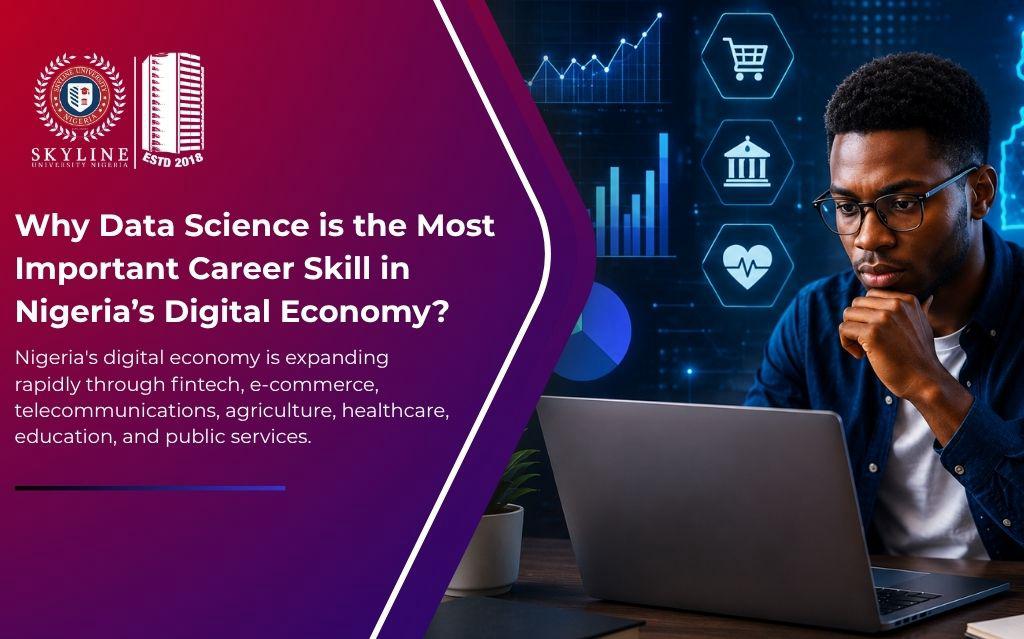
Why Data Science is the Most Important Career Skill in Nigeria’s Digital Economy.

Introduction Nigeria’s digital economy is expanding rapidly through fintech, e-commerce, telecommunications, agriculture, healthcare, education, and public services. As organizations generate increasing volumes of data, the ability to collect, analyze, and interpret that data has become a strategic advantage. Data science combines statistics, programming, machine learning, and domain knowledge to transform raw data into actionable insights. Consequently, it has emerged as one of the most valuable career skills for graduates and professionals. The Rise of Nigeria’s Digital Economy Government digital initiatives, widespread mobile connectivity, digital payment systems, and technology startups have accelerated digital transformation. Businesses now rely on data to understand customer behavior, improve efficiency, detect fraud, forecast demand, and support decision-making. This growing dependence has created strong demand for data scientists and analysts. Why Data Science Matters Data science enables evidence-based decision making, improves business performance, supports artificial intelligence applications, and creates innovation across industries. Banks use predictive analytics for credit scoring and fraud detection, hospitals analyze patient data to improve outcomes, farmers apply data-driven precision agriculture, while governments use analytics for planning and policy evaluation. Career Opportunities Professionals with data science skills can work as Data Analysts, Data Scientists, Machine Learning Engineers, Business Intelligence Analysts, AI Engineers, Data Engineers, and Research Scientists. These opportunities exist in finance, telecommunications, health, education, manufacturing, agriculture, cybersecurity, and consulting, both within Nigeria and remotely for global employers. Skills Required Essential competencies include Python or R programming, SQL, statistics, probability, data visualization, machine learning, cloud computing, critical thinking, communication, and ethical handling of data. Familiarity with tools such as Pandas, NumPy, Power BI, Tableau, TensorFlow, and Scikit-learn further improves employability.  Challenges Despite increasing opportunities, challenges remain, including limited computing infrastructure, inconsistent access to quality datasets, shortages of experienced mentors, and the need for continuous upskilling. Universities and industry should collaborate to strengthen practical training and research. Conclusion Data science is more than a technical discipline; it is a strategic capability that drives innovation, productivity, and economic growth. As Nigeria continues its digital transformation, individuals with strong data science skills will be well positioned to solve real-world problems, create new businesses, and contribute to national development. Investing in data science education today is therefore an investment in Nigeria’s digital future. References Provost, F., & Fawcett, T. (2013). Data Science for Business. Davenport, T. H., & Patil, D. J. (2012). Data Scientist: The Sexiest Job of the 21st Century. Harvard Business Review. National Information Technology Development Agency (NITDA). Nigeria Data Protection and Digital Economy publications. Mr. Alex Aaron, School of Science and Information Technology, Skyline University, Nigeria

Why Data Science is the Most Important Career Skill in Nigeria’s Digital Economy. Read More »

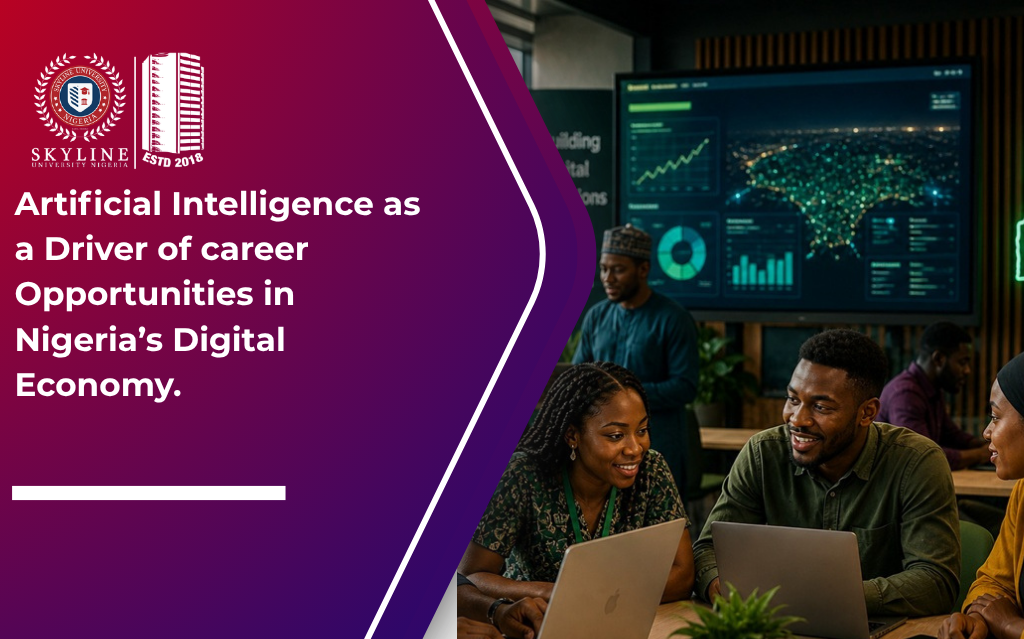
Artificial Intelligence as a Driver of Career Opportunities in Nigeria’s Digital Economy

Artificial Intelligence (AI) is rapidly transforming the global economy, and Nigeria is emerging as one of Africa’s leading digital innovation hubs. With a young population, increasing internet penetration, and a thriving technology ecosystem, AI presents enormous career opportunities for Nigerian students and professionals. As the country continues to embrace digital transformation across government, education, healthcare, agriculture, banking, and manufacturing, AI has become one of the most promising career paths for the future. Nigeria’s digital economy is expanding at an unprecedented pace. Businesses are increasingly adopting AI-powered solutions to automate operations, improve customer experiences, analyze large volumes of data, and enhance decision-making. From intelligent chatbots in customer service to fraud detection systems in financial institutions, AI is becoming an essential tool for organizations seeking to remain competitive. This growing demand has created a significant need for skilled AI professionals. One of the greatest advantages of pursuing a career in AI is the diversity of job opportunities available. AI specialists can work as machine learning engineers, data scientists, AI researchers, robotics engineers, computer vision experts, natural language processing specialists, and AI consultants. These roles are in high demand not only within Nigeria but also across international markets, allowing professionals to work remotely for global organizations while contributing to Nigeria’s economic development. AI also plays a critical role in solving some of Nigeria’s most pressing challenges. In healthcare, AI can support early disease diagnosis, improve medical imaging, and optimize hospital management. In agriculture, AI-powered systems help farmers predict weather conditions, monitor crop health, and increase productivity. Financial institutions use AI to detect fraudulent transactions, assess credit risks, and provide personalized banking services. Educational institutions are implementing AI-based learning platforms that personalize instruction and improve student outcomes. These practical applications demonstrate how AI contributes to national development while creating meaningful employment opportunities.   The Nigerian government has also recognized the importance of digital technologies in achieving sustainable economic growth. Investments in digital infrastructure, innovation hubs, entrepreneurship programs, and technology education are creating a supportive environment for AI adoption. Universities and training institutions are increasingly introducing AI, data science, and machine learning programs to equip graduates with industry-relevant skills.   For young Nigerians, AI offers more than just employment—it provides opportunities for innovation and entrepreneurship. Many start-ups are leveraging AI to develop solutions in e-commerce, logistics, fintech, cybersecurity, education, and healthcare. With access to cloud computing, open-source AI frameworks, and online learning platforms, aspiring AI professionals can build products that address local challenges while competing in global markets.   However, success in AI requires continuous learning. Professionals must develop strong foundations in mathematics, programming, statistics, data analysis, and problem-solving. Familiarity with programming languages such as Python, machine learning libraries, cloud platforms, and ethical AI practices will provide a competitive advantage. Soft skills, including communication, teamwork, creativity, and critical thinking, are equally important for collaborating across multidisciplinary teams. In conclusion, Artificial Intelligence is more than an emerging technology—it is a strategic driver of Nigeria’s digital economy. As industries increasingly adopt AI solutions, the demand for qualified professionals will continue to rise. By investing in AI education and skills development today, Nigerian students and professionals can position themselves for rewarding careers, contribute to national economic growth, and become innovators who shape the country’s digital future. AI is not simply the career of tomorrow; it is a career of today that offers limitless opportunities for those prepared to embrace it.   Dr. A. Syed Haroon Senior Lecturer, School of Science and Information Technology.  

Artificial Intelligence as a Driver of Career Opportunities in Nigeria’s Digital Economy Read More »

The Nursing Shortage in Nigeria: Why Your Choice to Study Nursing is More Important Than You Think

Nigeria is currently facing a serious shortage of nurses, creating challenges for healthcare delivery across the country. Hospitals, clinics, and primary healthcare centers are struggling to meet the growing healthcare needs of an increasing population with a limited number of nursing professionals. In this context, choosing to study nursing is not just a personal career decision; it is a contribution to the health and well-being of millions of Nigerians. One of the major causes of the nursing shortage in Nigeria is the migration of healthcare professionals to other countries in search of better salaries, improved working conditions, and greater career opportunities. This phenomenon, often referred to as the “brain drain,” has resulted in many experienced nurses leaving the country each year. As a result, the remaining workforce is often overwhelmed by high patient loads and long working hours. In addition to migration, the number of nursing schools and training opportunities available is still insufficient to meet the country’s healthcare demands. Nigeria’s rapidly growing population means that more healthcare services are needed, especially in rural and underserved communities where access to qualified healthcare professionals is limited. Many healthcare facilities in these areas operate with very few nurses, making it difficult to provide quality patient care. The consequences of the nursing shortage are significant. Patients may experience longer waiting times, delayed treatment, and reduced access to essential healthcare services. Overworked nurses may also face physical and emotional exhaustion, which can affect job satisfaction and the quality of care provided. Ultimately, the shortage impacts the overall efficiency and effectiveness of the healthcare system. This is why the decision to study nursing is more important than many people realize. By choosing nursing, students are stepping into a profession that is highly valued and urgently needed. Nurses are often the first point of contact for patients and play a central role in health promotion, disease prevention, treatment, and rehabilitation. They provide care, comfort, education, and support to individuals and families during some of the most difficult moments of their lives. Furthermore, nursing offers numerous opportunities for professional growth and specialization. Nurses can build careers in areas such as maternal and child health, public health, mental health, critical care, education, and research. The profession also provides opportunities for leadership and advocacy, allowing nurses to influence healthcare policies and improve patient outcomes. For Nigeria to achieve better health indicators and strengthen its healthcare system, more young people must be encouraged to pursue careers in nursing. Every nursing student represents hope for communities in need of healthcare services and a step toward reducing the burden on the existing workforce. In conclusion, Nigeria’s nursing shortage is a pressing issue that requires immediate attention. Choosing to study nursing is more than selecting a career; it is accepting the responsibility of serving humanity and contributing to national development. Future nurses are not only filling a workforce gap but also shaping the future of healthcare in Nigeria. Their decision matters more than they may ever imagine. AISHA HABIBU ALIYU : SCHOOL OF  SBMS LEVEL: 500

The Nursing Shortage in Nigeria: Why Your Choice to Study Nursing is More Important Than You Think Read More »

Skyline University Nigeria Makes History with Launch of Nigeria’s First HP Gaming Garage

Skyline University Nigeria has recorded another landmark achievement with the official launch of the HP Gaming Garage, the first facility of its kind in Nigeria. The innovative initiative is designed to equip students and young innovators with practical skills in game design, game programming, esports management, digital creativity, and emerging technologies, preparing them for opportunities in the global digital economy. The launch ceremony attracted distinguished guests from government, the education sector, and the technology industry, highlighting the growing importance of innovation and digital skills development in Nigeria. Among the honored guests were Hon. Comrade Ibrahim Abdullahi Waiya, Honourable Commissioner, Ministry of Information and Internal Affairs; Mr. Nasiru Surajo, Director of Private Schools, Ministry of Education; Mr. Eze Emmanuel, Country Sales Manager/Country Director for HP Nigeria; and several proprietors and administrators of private schools who attended the event. A major highlight of the occasion was the official commissioning of the HP Gaming Garage. The Honourable Commissioner, Ibrahim Abdullahi Waiya, was escorted by the Pro-Chancellor of Skyline University Nigeria, Nadit Anand, for the formal opening and tour of the facility. Speaking during the event, university the Vice Chancellor of the university Prof. Ajith Kumar V.V.         reaffirmed Skyline University Nigeria’s commitment to innovation, technology-driven education, and the development of future-ready graduates. The launch of the HP Gaming Garage further strengthens the university’s reputation as a pioneer in experiential learning and digital transformation in higher education. The HP Gaming Garage offers learners access to industry-relevant training in: Game Design Game Programming Esports Management Digital Entrepreneurship Digital Creativity and Innovation The initiative is expected to provide students and young professionals with valuable skills, industry exposure, and opportunities within the rapidly growing global gaming and technology sectors. The event concluded with a guided tour of the facility, demonstrations of the platform’s capabilities, and interactions between guests, students, and university management. With this pioneering achievement, Skyline University Nigeria continues to lead the way in delivering world-class education and empowering the next generation of innovators, creators, and digital leaders. Theme “Empowering the Next Generation of Digital Innovators Through Gaming, Technology, and Creativity.”

Skyline University Nigeria Makes History with Launch of Nigeria’s First HP Gaming Garage Read More »

Khairun University Vice Chancellor Visits Skyline University Nigeria.

The Vice-Chancellor of Khairun University, Prof. Abdulrashid Garba, paid a courtesy visit to Skyline University Nigeria. During the visit, the Khalifah, Isiyaku Rabiu, commended Skyline University Nigeria, describing it as a mirror of ideas and a model for private universities across Kano State. In his remarks, the Vice-Chancellor of Skyline University Nigeria emphasized the institution’s openness to collaboration in areas such as research, voluntary community service, and community-driven projects with meaningful social impact. He also highlighted opportunities for co-teaching initiatives and provided clarity on the development of a Memorandum of Understanding (MoU) between both institutions. Prof. Abdulrashid Garba of Khairun University spoke on the importance of comparative education and the need to use education as a tool for purposeful development and societal advancement. As part of the visit, a planning committee for the MoU signing was inaugurated. The committee is expected to begin its work immediately, with the formal signing ceremony scheduled to take place within two weeks, on 15 June 2026. The visit marks a significant step toward strengthening academic partnerships, fostering knowledge exchange, and promoting collaborative initiatives that will benefit both institutions and the wider community.

Khairun University Vice Chancellor Visits Skyline University Nigeria. Read More »

School Of Legal Studies , Law Week.

The School of Legal Studies at Skyline University Nigeria successfully organized a remarkable event featuring the delivery of the final judgment in the Fall 2025 Moot Court Trial, presentation of Skyline Call to Bar Certificates, induction of new members into the Equity, Human Rights and Justice Chamber, and award presentations to outstanding students. The programme showcased formal court proceedings where the final judgment of the Fall 2025 Moot Court Trial was delivered, giving students practical exposure to courtroom procedures and judicial processes. The session provided participants with a realistic legal experience and strengthened their understanding of advocacy and the administration of justice. An interactive session was also conducted by Alkassim Nasib Danpullo, who enlightened students on court proceedings and their significance in the justice system. Students gained valuable insights into legal advocacy, courtroom ethics, and judicial practices. Following the court proceedings, certificates and awards were presented to deserving students. Newly inducted members of the Equity, Human Rights and Justice Chamber received their certificates, while winners of the Moot Court Competition, Advocate of the Year, and the Debate Competition were also recognized for their outstanding performances. The event successfully promoted practical legal education, advocacy skills, academic excellence, and active student participation in professional legal development.

School Of Legal Studies , Law Week. Read More »

Matriculation Ceremony for the 2025/2026 Academic Session of Skyline University Nigeria.

The management of Skyline University Nigeria has announced that the Matriculation Ceremony for the 2025/2026 Academic Session will held on Friday, 8 May 2026, at the RMK Auditorium, Skyline University Campus.  The ceremony marks the formal induction of newly admitted students into the university community and signifies the beginning of their academic journey at Skyline University Nigeria. During the event, students will officially accept the institution’s rules, values, and academic standards while taking the matriculation oath. The ceremony will also feature an address by the Vice-Chancellor, who is expected to speak on academic excellence, discipline, and the core values of the university, encouraging students to embrace responsibility and integrity throughout their academic journey.

Matriculation Ceremony for the 2025/2026 Academic Session of Skyline University Nigeria. Read More »

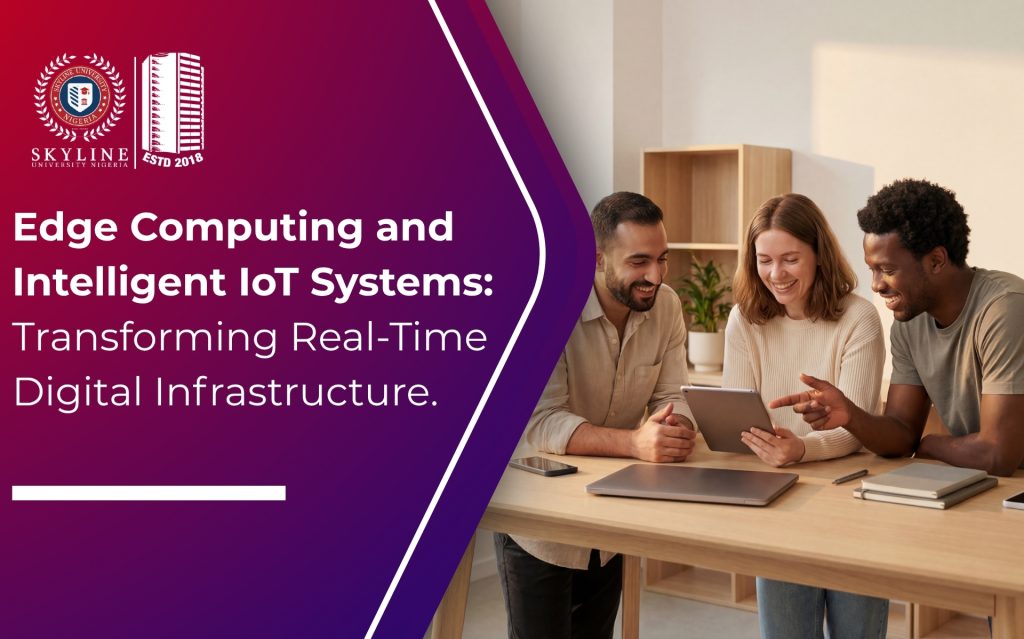
Edge Computing and Intelligent IoT Systems: Transforming RealTime Digital Infrastructure

Introduction Edge Computing and the Internet of Things (IoT) are among the most exciting developments in modern technology today. IoT connects everyday devices such as sensors, smartphones, vehicles, and machines to the internet, allowing them to collect and share data. However, as the number of connected devices grows, traditional cloud computing systems are facing challenges such as delays (latency), high data traffic, and slower response times. This is where edge computing comes in. Edge computing brings data processing closer to where the data is generated, enabling faster and more efficient decision-making. Together, edge computing and IoT are creating intelligent systems that can respond in real time and improve how we live and work. Innovation in Edge Computing and IoT Recent innovations in technology have made edge computing and IoT more powerful than ever. With the rise of artificial intelligence (AI) and faster communication technologies like 5G, devices can now process data locally instead of sending everything to the cloud. For example, smart cameras can now detect objects instantly, and wearable devices can monitor health conditions in real time. Technologies such as edge AI, fog computing, and lightweight software containers are making it easier to deploy intelligent systems even on small devices. These innovations are helping industries become faster, smarter, and more efficient. Relationship Between Edge Computing and Intelligent IoT Systems Edge computing and IoT work hand in hand. IoT devices generate large amounts of data, while edge computing processes that data close to the source. In the past, data had to be sent to distant servers for processing, which caused delays. With edge computing, devices can make decisions instantly without waiting for the cloud. This is especially important for applications like autonomous vehicles or medical monitoring systems where timing is critical. This strong relationship has led to the development of intelligent IoT systems that can think, learn, and act independently. Applications and Emerging Impact The impact of edge computing and IoT can be seen in many areas of life ranging from healthcare, industry to cybersecurity. In healthcare for example, doctors can monitor patients remotely using smart devices that provide real-time data. For smart cities, traffic lights, waste systems, and energy grids can operate more efficiently. Farmers can use sensors to monitor soil and weather conditions, improving crop yields. Factories can detect machine faults early and prevent breakdowns. Self-driving cars and smart traffic systems rely on real-time data processing. Systems can detect and respond to threats instantly. These applications show how edge computing and IoT are transforming industries and improving everyday life. Conclusion Edge computing and intelligent IoT systems are changing the way technology works by making it faster, smarter, and more efficient. Instead of relying only on centralized systems, computing is now happening closer to where data is generated. As these technologies continue to evolve, they will play an important role in building smart environments, improving services, and solving real-world problems. However, issues such as security, cost, and system complexity must be carefully managed. With continued innovation and collaboration, edge computing and IoT will shape the future of digital technology. References Shi, W., et al. (2016). Edge Computing: Vision and Challenges. IEEE Internet of Things Journal. Satyanarayanan, M. (2017). The Emergence of Edge Computing. Computer. Chiang, M., & Zhang, T. (2016). Fog and IoT: An Overview. IEEE Internet of Things Journal. Zhou, Z., et al. (2019). Edge Intelligence: Paving the Last Mile of AI with Edge Computing. Proceedings of the IEEE. Khan, L. U., et al. (2020). Edge Computing for IoT: A Survey. IEEE Access. Cisco (2024). Annual Internet Report. IBM (2025). Edge Computing in Industry Report.                                                                                                         Written by,Mr. Alex Aaron, Faculty, School of Science and Information Technology, Skyline University, Nigeria

Edge Computing and Intelligent IoT Systems: Transforming RealTime Digital Infrastructure Read More »